What's the Difference Between Window Washing and Window Cleaning?
If you've been researching window cleaning services, you might have stumbled across articles explaining the crucial distinction between "window washing" and "window cleaning." According to these sources, washing is a quick, surface-level job whilst cleaning is thorough and comprehensive. One's for maintenance, the other's for proper deep cleaning. They're completely different services with different price points.
Here's the thing: in the UK, this distinction is largely invented.
Let me explain what's actually going on here, because understanding the reality behind these terms will help you get better service and avoid unnecessary confusion.
The British English Reality
In British English, we have "window cleaners"—full stop. The Oxford Advanced Learner's Dictionary defines "window cleaner" as the British English term for a person whose job is to clean windows, noting that Americans typically say "window washer" instead.
Wikipedia's entry on window cleaning opens with "Window cleaning, or window washing", treating the terms as direct synonyms. That's how they're used in Britain. If you tell someone in Manchester or Bristol that you're having your windows "washed," they'll understand you mean exactly the same thing as having them "cleaned."
This isn't pedantry. It matters because if you're booking a "window washing" service in the UK expecting something different from "window cleaning," you're working with a false distinction that doesn't exist in British usage. The terminology simply refers to the same job.
Where Did This Distinction Come From?
The differentiation between "washing" and "cleaning" appears to be primarily an American marketing development that's seeped into online content. Various US cleaning companies now distinguish between window washing (quick, just the glass) and window cleaning (thorough, includes frames and sills).
The logic goes like this: washing is surface-level maintenance using basic tools, whilst cleaning is a comprehensive service using specialised equipment and techniques. One's cheap and cheerful; the other's premium and thorough.
It's not that this distinction is entirely meaningless, there are genuinely different levels of service in the window cleaning industry. The problem is packaging them under these specific terms and pretending there's some established industry-wide definition. There isn't.
Ask ten different window cleaning companies what the difference is between "washing" and "cleaning," and you'll get ten different answers. Some will insist there's a major distinction. Others will look at you blankly because they use the terms interchangeably. Most British window cleaners have never even heard of this supposed difference.
What the Terms Actually Mean in Practice
When UK window cleaning companies use these terms, they're generally synonymous. Your local window cleaner who comes round every month isn't performing a different service depending on whether they call it "washing" or "cleaning", they're cleaning your windows to whatever standard you've agreed upon.
However, the underlying concept that sparked this terminology debate does reflect reality: there are different levels of window cleaning service. Understanding what these actually involve matters far more than what they're called.
Basic exterior cleaning is what most people get on a regular schedule. The cleaner uses a water-fed pole system with purified water, scrubs the outside of your windows, and lets them dry naturally. This is efficient, safe, and effective for routine maintenance. Your windows look presentable from outside, which is usually what matters most for kerb appeal.
Comprehensive cleaning includes both interior and exterior surfaces, frames, sills, and sometimes tracks. This takes significantly longer, requires access to your home, and costs more. It's what you'd book for a deep clean, when moving house, or for that twice-yearly thorough service.
Specialist cleaning tackles specific problems: hard water stains, paint splatter, builders' residue, or other stubborn marks that normal cleaning won't shift. This requires different products, techniques, and pricing.
These are real distinctions based on what's actually done, not arbitrary labels about "washing" versus "cleaning."
Why This Terminology Confusion Matters
The practical impact of this invented distinction is that it creates unnecessary confusion when you're trying to book services. You might encounter a company that proudly advertises "window cleaning" (not just washing!) and charges a premium for it, only to discover they're offering exactly what another company calls their standard service.
Worse, you might book a "window washing" service expecting a thorough clean based on what the term means in ordinary English, only to find they've interpreted it as meaning "quick exterior only" based on some American industry distinction you'd never heard of.
This muddled terminology also makes it harder to compare quotes. If Company A charges £30 for "window washing" and Company B charges £45 for "window cleaning," are you comparing like with like? Without knowing exactly what each company includes in their service, the terminology tells you nothing useful.
What You Should Actually Ask About
Instead of getting hung up on whether a company offers "washing" or "cleaning," ask specific questions about what the service includes:
"Do you clean interior surfaces as well as exterior?" This is the big one. Many standard services are exterior-only, which is fine if that's what you want, but you need to know upfront.
"Are frames and sills included?" Some services just clean the glass; others include frames and sills as standard. This significantly affects how long the job takes and how complete the final result looks.
"Do you clean window tracks?" This is often an optional extra rather than standard, but it makes a noticeable difference if your tracks are grimy.
"What method do you use?" Water-fed poles are standard for exteriors but can't be used indoors. For interior cleaning, they'll use traditional methods with squeegees and cloths. Knowing this helps you understand what to expect.
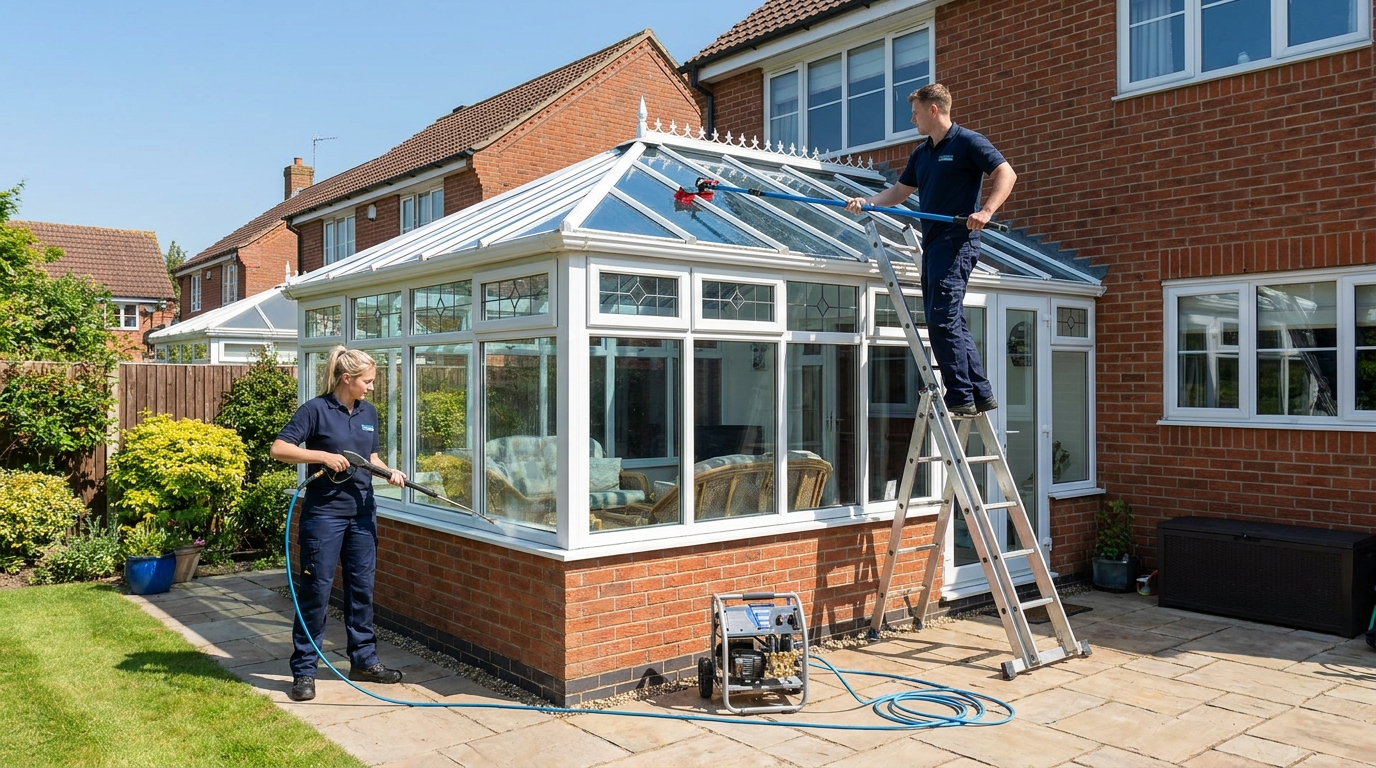
"What's not included in the standard price?" Screens, shutters, hard water stain removal, and conservatory roofs are commonly charged as extras. Finding out beforehand prevents surprise costs.
These questions get you actual useful information rather than trying to decode ambiguous terminology.
The Quality Question Nobody's Asking
Here's what really matters: regardless of whether a company calls it "washing" or "cleaning," are they actually good at cleaning windows?
A cheap "window washing" service from a skilled professional might deliver better results than an expensive "comprehensive window cleaning" from someone who's careless. The terminology tells you nothing about competence, attention to detail, or whether they'll leave your windows genuinely spotless.
Look at reviews. Ask for recommendations. Check if they're insured. Find out how long they've been in business. These factors predict service quality far better than whatever they happen to call their service.
The equipment matters too. Modern water-fed pole systems with purified water produce excellent results, but only if the operator knows what they're doing. Traditional squeegee work can be brilliant or terrible depending on technique. The tool is less important than the skill wielding it.
The American Influence on UK Services
Why are some UK companies adopting this American distinction? Partly it's internet-driven, people search for "window washing vs window cleaning," so content creators write articles about it, which reinforces the idea that there's a difference, which prompts more searches. It's a self-perpetuating cycle of confusion.
There's also a marketing advantage to offering tiered services with different names. "Window washing" as a budget option and "window cleaning" as a premium service creates a pricing structure that some customers find appealing. It allows companies to serve different market segments with apparently different products, even if the actual work differs only slightly.
This isn't necessarily cynical, offering different service levels makes sense. But calling them "washing" and "cleaning" rather than "basic exterior clean" and "comprehensive interior and exterior clean" doesn't make things clearer for customers.
What "Window Cleaning" Has Always Meant
The irony is that "window cleaning" as a profession has always encompassed everything from a quick once-over to meticulous deep cleaning. The term was never meant to specify a particular level of service, it's just the general name for cleaning windows, however that's done.
A window cleaner's job description has historically included various approaches and tools: chamois and scrim, squeegees and buckets, water-fed poles, or even rope access for high-rise work. These are all "window cleaning." The method and thoroughness varied by context, price, and what the customer wanted.
Trying to split hairs about "washing" versus "cleaning" as if they're fundamentally different services doesn't reflect how the industry has worked for decades. It's a recent distinction, primarily American, that serves marketing purposes more than customer clarity.
How to Get What You Actually Want
The solution to all this confusion is refreshingly straightforward: describe what you want rather than using potentially ambiguous labels.
Don't say: "I need window washing" or "I want window cleaning", these terms might mean different things to different companies.
Do say: "I need the outside of my windows cleaned" or "I want both inside and outside done, including frames and sills", this is crystal clear.
When getting quotes, describe your requirements explicitly. "I have a three-bed semi with about 15 windows. I'd like the exterior cleaned every two months and a full interior and exterior clean twice a year. Can you quote for both?" This tells them exactly what you want without relying on terminology that might be interpreted differently.
If a company's website talks about "window washing" versus "window cleaning" as distinct services, don't assume you understand what they mean. Ring them up and ask them to explain the actual difference in terms of what work is performed. If they can't articulate a clear distinction, that tells you something useful about whether this is a meaningful service difference or just marketing fluff.
The Bottom Line
In British English, "window washing" and "window cleaning" are synonyms. Any attempt to draw a distinction between them is importing an American marketing concept that doesn't align with how these terms are actually used in the UK.
That said, there are genuine differences in what window cleaning services can include, from basic exterior-only maintenance to comprehensive interior and exterior deep cleaning. These differences matter for pricing and results.
The trick is to ignore the potentially confusing terminology and focus on specifics: what surfaces are cleaned, what methods are used, what's included in the price, and how often the service is performed. This gives you the information you actually need to make informed decisions.
When you're booking window cleaning services, remember that the name matters far less than the substance. A good window cleaner who delivers spotless results at a fair price is worth having regardless of whether they call themselves a window washer, window cleaner, or window maintenance technician.
Clear communication about expectations beats semantic debates every time. Know what you want, ask specific questions, and choose based on competence and value rather than getting bogged down in terminology that might not mean what you think it means.
Your windows don't care what the service is called—they just want to be clean. Focus on that, and the rest is just noise.