How Solar Cleaners Use Deionized Water (No Soap Method)
Most homeowners cleaning their solar panels with washing-up liquid don't realise they're creating a problem. Soap lifts dirt, but it leaves behind a film that attracts dust and grime faster than a clean surface would. Professional cleaning companies stopped using soap years ago for this reason.
Instead, they use deionized (DI) water with soft rotating brushes. No chemicals, no residue, no streaks. The water dries completely clear, leaving panels at full output.
Why Soap Leaves Residue
When you clean solar panels with standard detergent, the soap molecules don't rinse away completely — especially in hard water areas like Leeds or Birmingham, where mineral deposits make the problem worse. This invisible film reduces light transmission, which means less electricity production.
Deionized water avoids this entirely. It's regular water that's been stripped of all dissolved minerals, salts, and ions through filtration. The result is water with zero total dissolved solids (TDS) that evaporates without leaving any trace behind.
Professional cleaners have documented output improvements of up to 17% after switching from soap-and-water cleaning to pure DI water. Panels also stay cleaner longer because there's no sticky residue to trap airborne particles.
The Professional Method: Soft Brushes and Pure Water
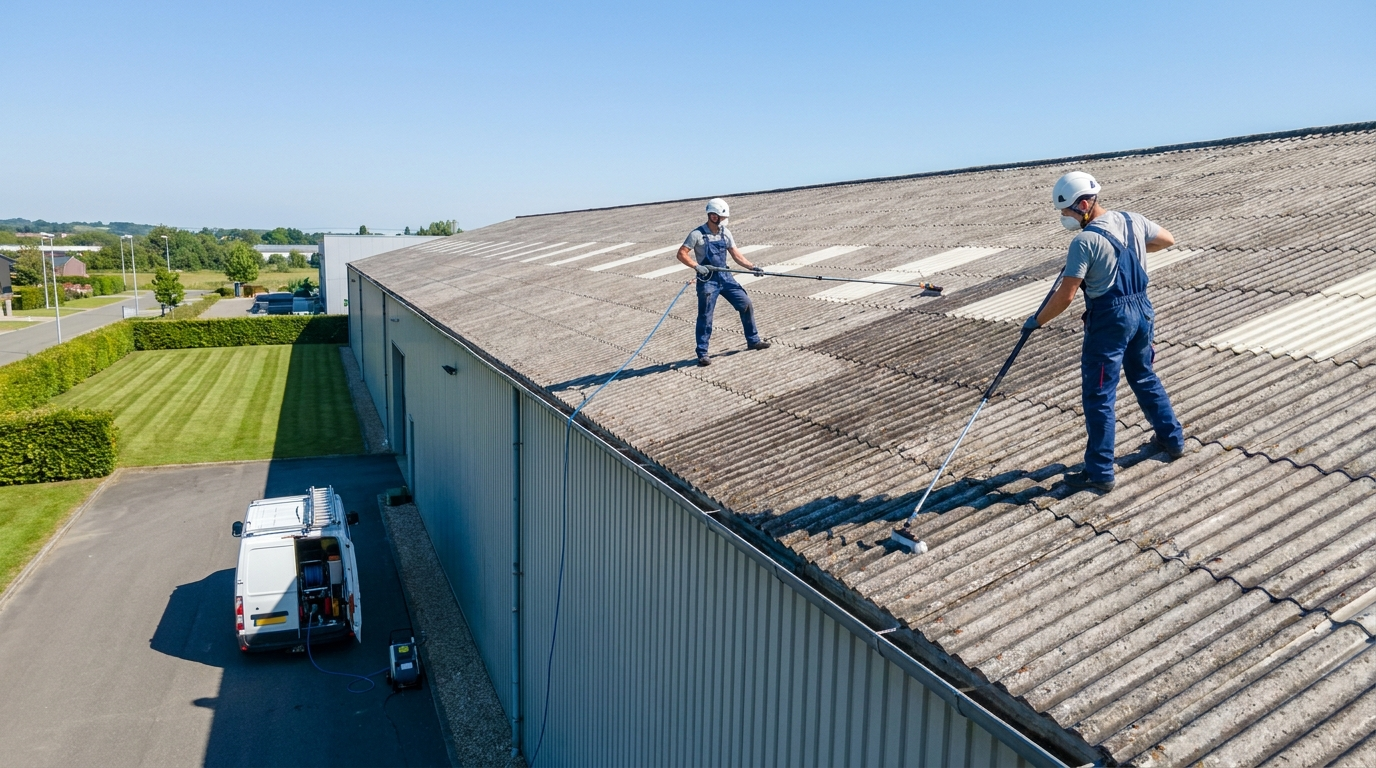
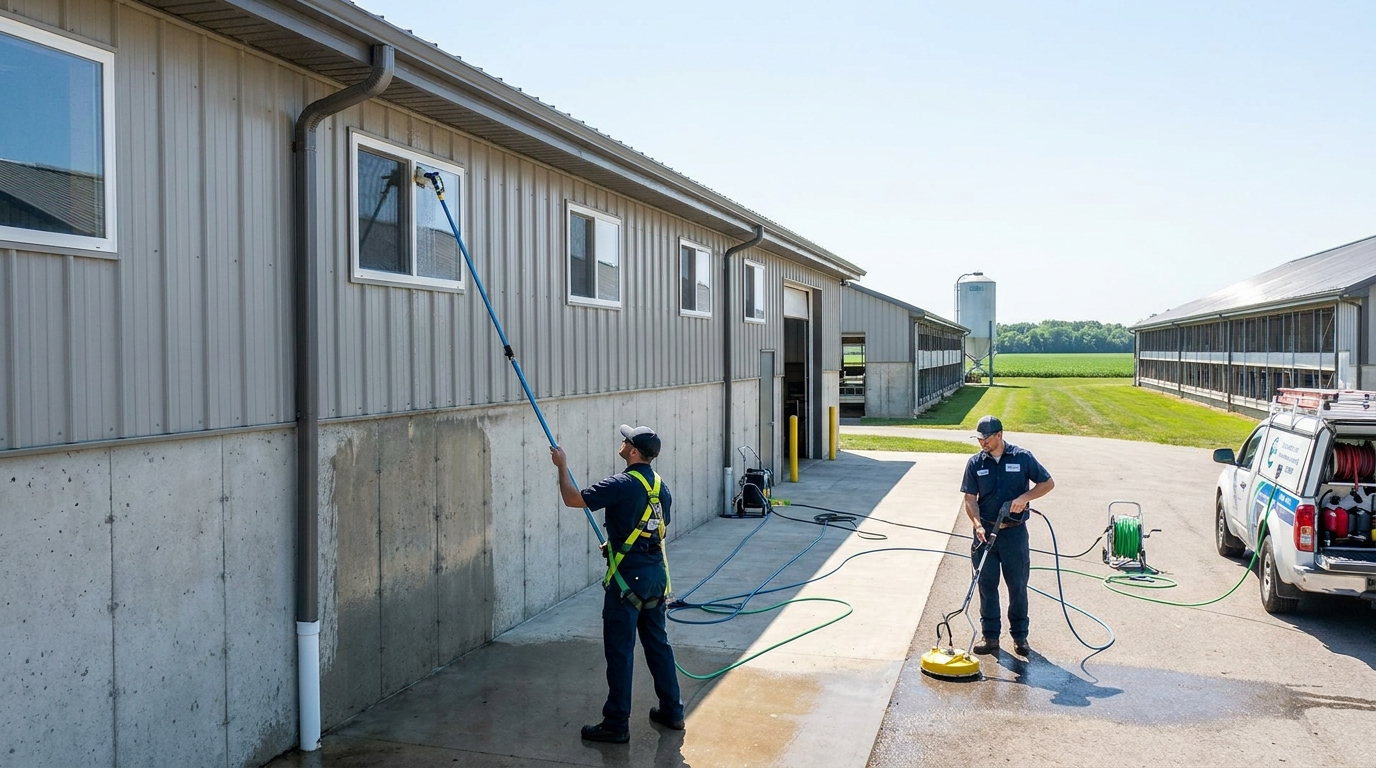
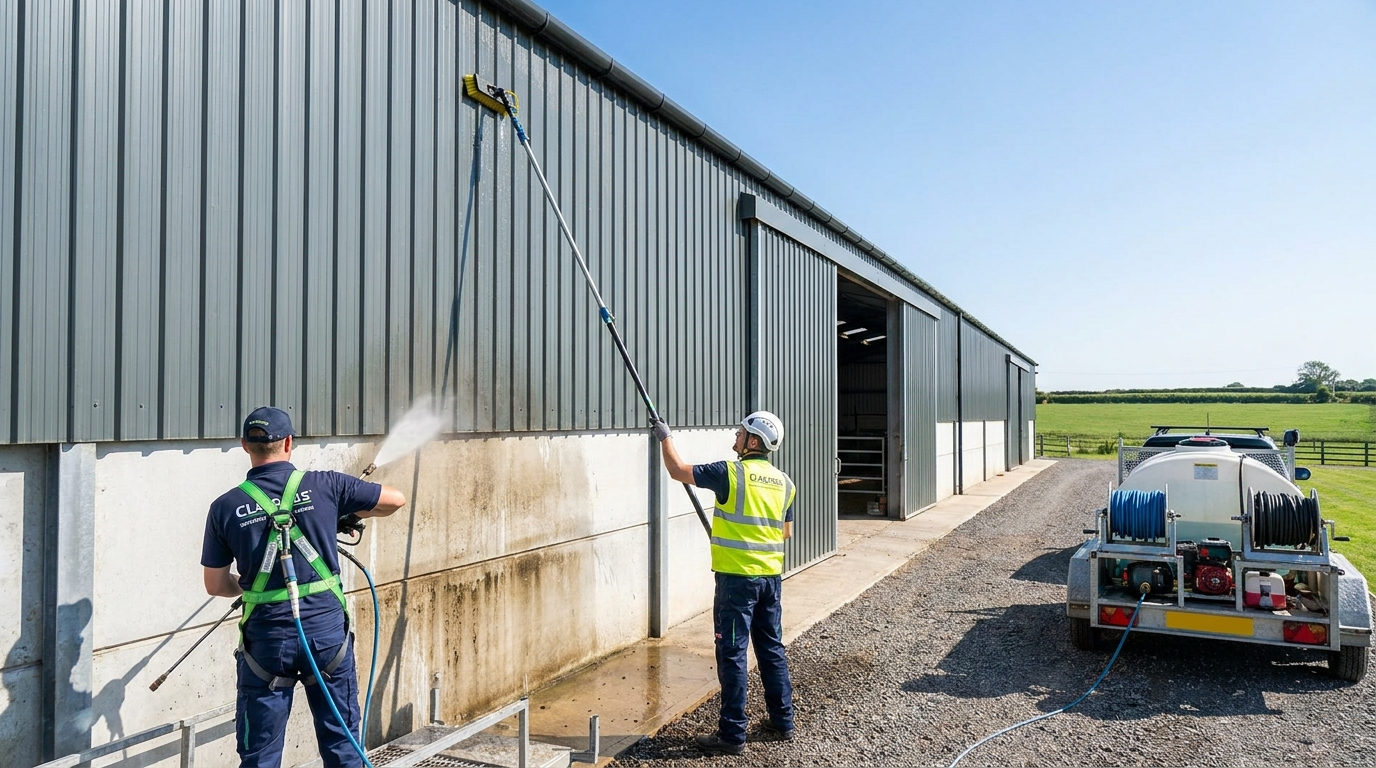
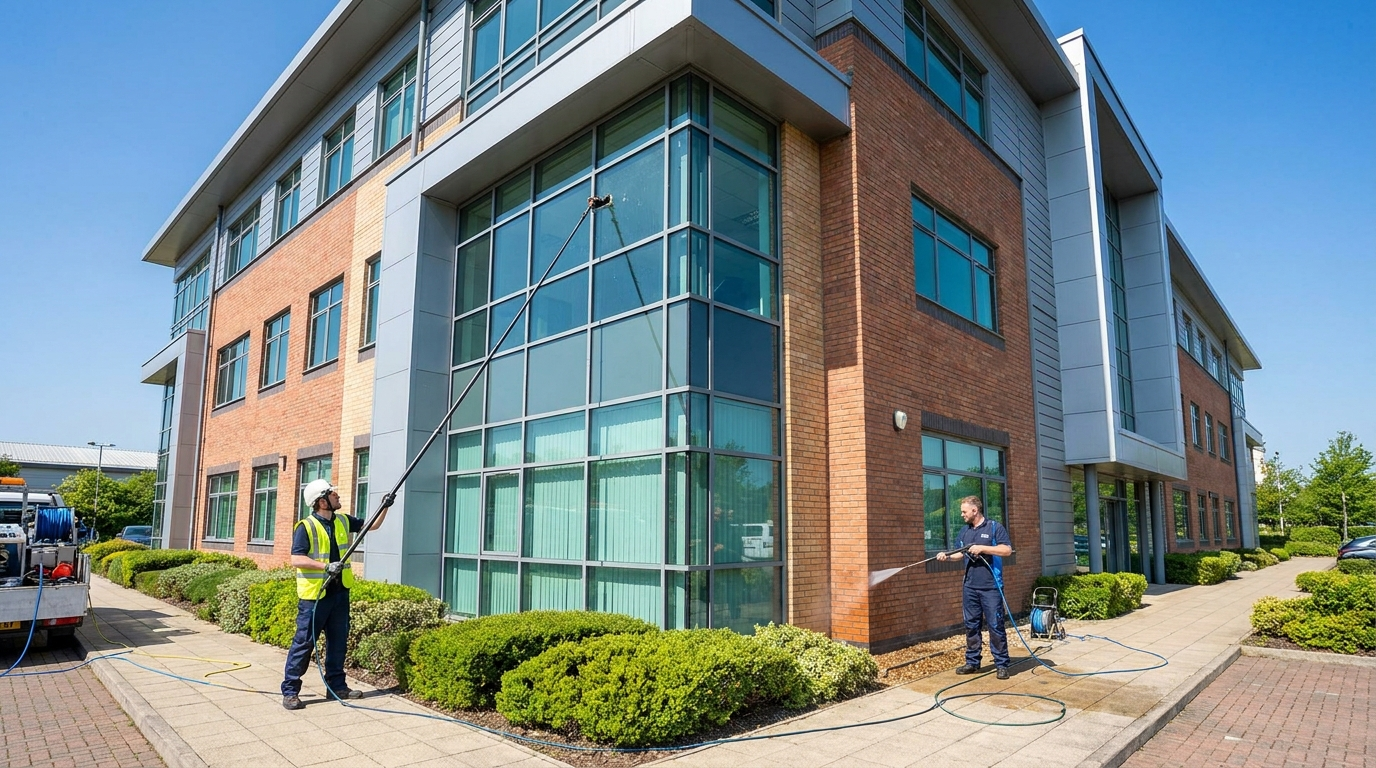
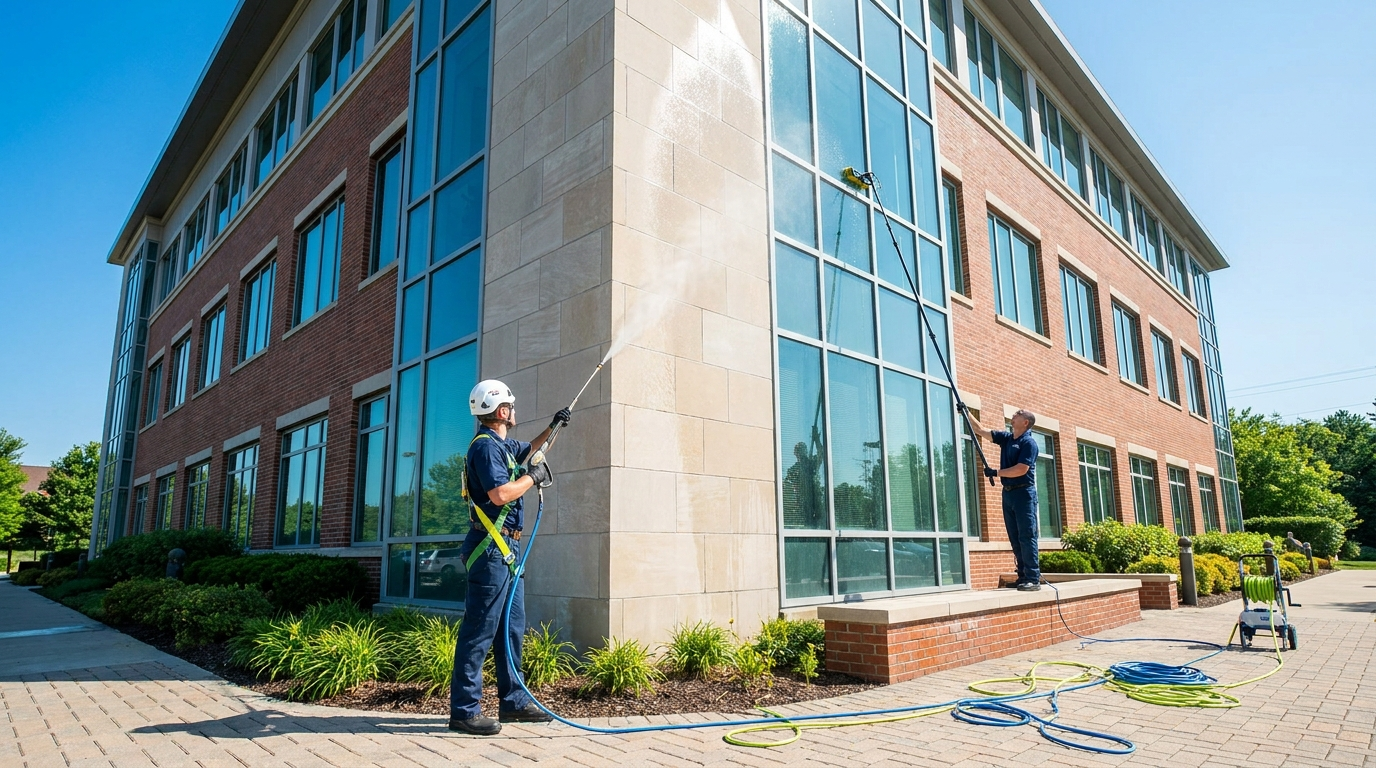
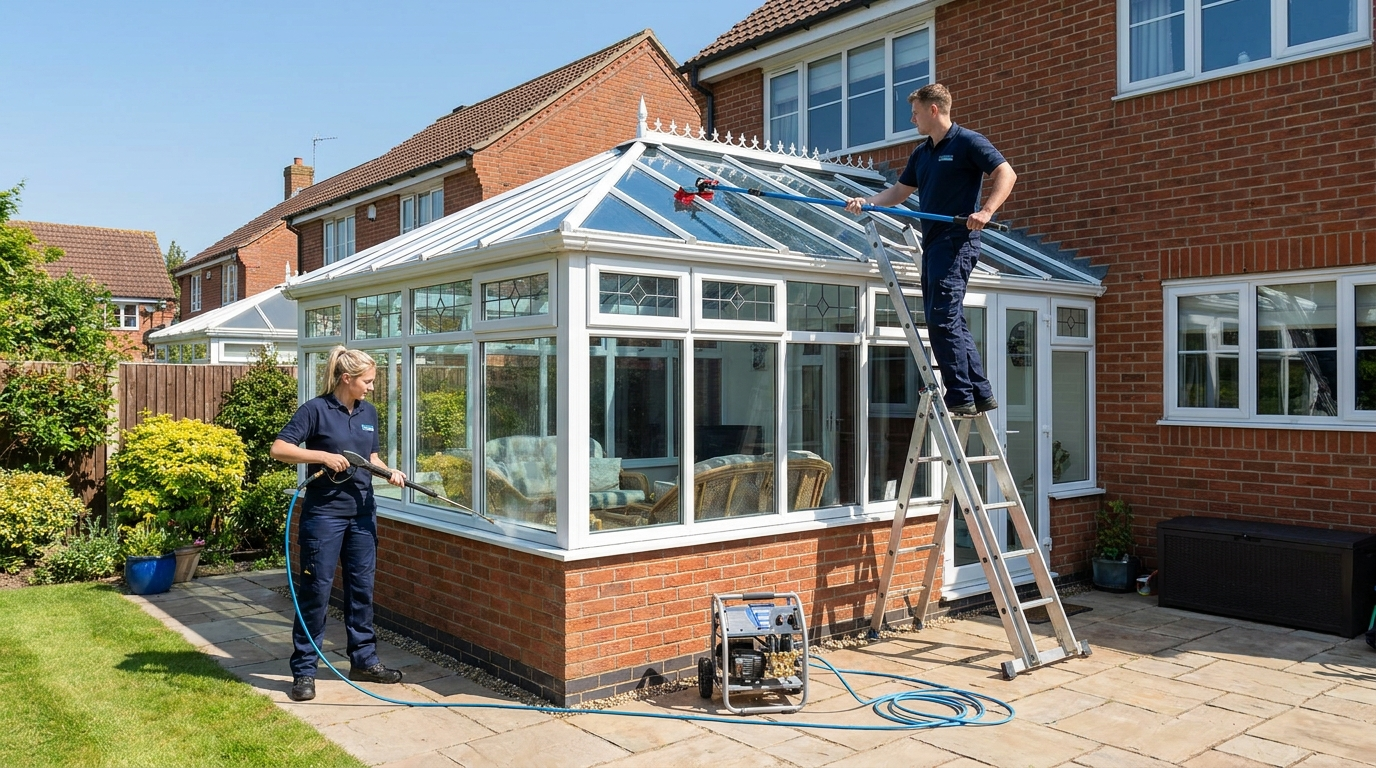
The technique is straightforward. Rotating soft brushes — similar to the ones used in touchless car washes — are mounted on telescopic poles or vehicle-mounted systems. The brushes connect to a pressurised DI water supply, creating a continuous rinse while they gently agitate the panel surface.
Start by brushing away loose debris in straight lines, working from top to bottom. The soft bristles (typically made from natural materials or synthetic equivalents) lift embedded dirt without scratching the glass or aluminium frame. As you brush, the DI water rinses everything away immediately. No soap, no squeegee needed.
For ground-mounted arrays or single-storey installations, a telescopic pole system keeps you safely on the ground while reaching 20-foot heights. Larger commercial installations often use vehicle-mounted boom systems that can service an entire array from strategic parking positions.
The water pressure stays gentle — around 30-40 PSI — just enough to maintain flow through the brush head without risking panel damage. This pressure is roughly equivalent to a standard garden hose, far below the 200+ PSI that might crack glass or force water past panel seals.
What You Need (And What It Costs)
Basic portable DI systems start at around £50-£150 for homeowners, producing 500-2000 litres of pure water before the resin needs replacing. That's enough to clean a typical residential solar array several times.
A complete kit for DIY use includes:
- - Portable DI filter system (10-50 litre resin capacity)
- - Telescopic pole (extending to 20-40 feet)
- - Soft rotating brush attachment
- - Water flow control valve
Total investment: £150-£400 for a setup that'll last years. Compare this to hiring professionals at £100-£200 per cleaning session, and the equipment pays for itself after 2-3 uses.
For commercial properties or homeowners who prefer buying water rather than making it, bulk DI water costs £0.19-£0.64 per litre depending on quantity. A 25-litre container (£10-£16) cleans most residential installations twice.
When to Clean and What Results to Expect
The cleaning schedule depends on your local environment. Properties in clean rural areas need attention once or twice yearly, while urban installations near busy roads might benefit from quarterly cleaning. Pollen-heavy springs or dusty summers call for additional sessions regardless of location.
Early morning or late evening work best — never clean hot panels in direct sunlight, as rapid water evaporation can leave spots even with DI water. The panels should be cool to the touch before you start.
Panels cleaned with this method stay cleaner between services because there's no soap film to trap new contamination. The glass dries completely clear, maintaining optimal light transmission.
DIY vs Professional
Homeowners with ground-level panels or comfortable roof access can handle this themselves. The technique is forgiving, the equipment is accessible, and the safety requirements are manageable with proper pole systems.
Go professional for:
- Arrays requiring ladder work or steep roof access
- Large commercial installations where downtime matters
- Properties where equipment storage isn't practical
- Situations where quarterly cleaning makes hired service cost-effective
DIY makes sense for:
- Ground-mounted systems or low, accessible roofs
- Properties with 2-3 annual cleaning schedules
- Homeowners who enjoy maintenance tasks
- Installations where you're already cleaning windows or other exterior surfaces
What to Do Next
Check your current panels for soap residue — look for a slight haze or film, especially noticeable in angled sunlight. If you're currently using detergent, switch to plain water for now while you source DI equipment.
Research local suppliers for portable DI systems or bulk water purchases. Window cleaning suppliers often carry suitable equipment since they use identical methods.
Test your tap water's TDS level with an inexpensive meter (under £10) — readings above 50 PPM suggest DI water will make a noticeable difference in your cleaning results.
Professional solar cleaners stopped using soap because pure water works better. The initial equipment investment pays for itself quickly, and your panels perform consistently at full output. The question is whether you want to keep fighting soap residue or use the right tools from the start.