
How commercial exterior cleaning works: a property manager's step-by-step guide
Most property managers assume exterior cleaning is fairly straightforward — turn up with a pressure washer, blast everything, job done. That assumption is what leads to cracked stucco, stripped paint, water forced behind EIFS cladding, and warranty claims that cost far more to fix than the cleaning ever would have. The method matters. So does the order of operations. This guide walks through a commercial exterior cleaning job from start to finish — what good preparation looks like, which surfaces need which approach, and what a proper final inspection actually involves.
Before anyone picks up a hose: the pre-job walkthrough
The first hour of a
commercial exterior clean happens before any equipment is unloaded. A proper site walkthrough is where every downstream decision gets made — and skipping it is where most problems start.
The walkthrough has one purpose: match what's on the building with the right method for each surface, and flag anything that could go wrong. That means walking the full perimeter and noting every material — render, brick, concrete aprons, loading dock surfaces, metal cladding, painted fascia, and anything that looks like EIFS or stucco. You're also looking for existing damage: open joints, cracked caulk, spalled brickwork, and any areas where water could be driven into the structure rather than running off it.
A few other things need to be confirmed before work begins:
- Tenant notification — 48 hours' notice is standard, covering which areas will be affected and during what window
- Weather check — cleaning in heavy rain wastes time, and applying chemical treatments in high wind creates a drift risk for people and plants nearby
- Equipment verification — confirming the right nozzles, solution ratios, and access equipment for upper levels
- Landscaping protection — pre-wetting planting beds before soft wash solutions are applied, and covering anything delicate near concentrated wash areas
None of this is complicated. But skipping it is how a four-hour job becomes a two-day problem.
The cleaning sequence: work top to bottom, every time
Once prep is done, the cleaning follows a sequence that prevents re-soiling already-finished areas. The rule is simple: start at the highest point and work down. Upper facade first, lower walls second, ground-level hardscape last.
Step one is debris removal. Leaf litter, bird droppings, cobwebs, and loose surface dirt all need to come off before any wet cleaning starts. Pressure washing over loose organic material just moves it around and can grind it further into porous surfaces.
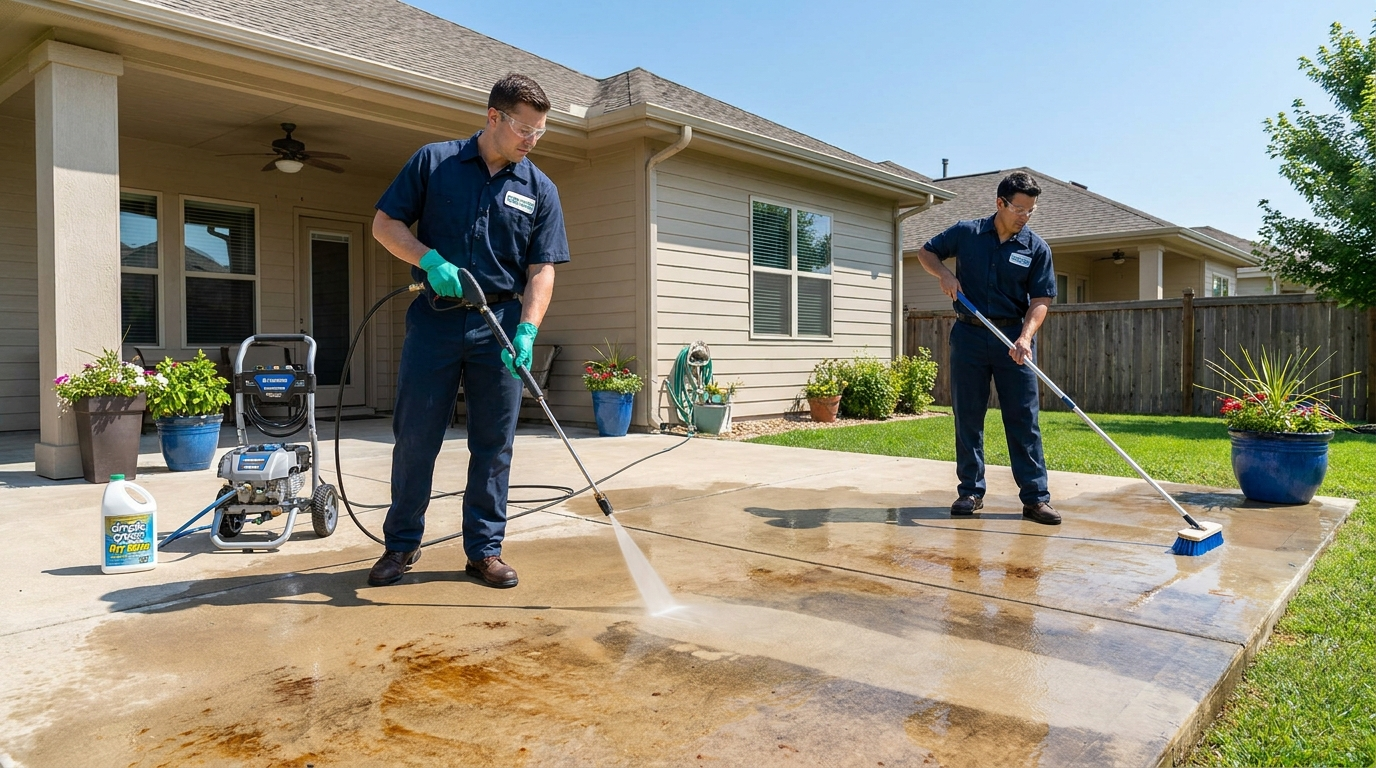
Step two is stain pre-treatment. Heavy staining — oil on a loading dock apron, rust streaks from metal fixings, algae patches on render — won't lift with water alone. Each type needs a targeted treatment: degreasers for oil and grease, sodium hypochlorite-based solutions for biological growth like algae and lichen, specialist products for metal run-off staining. These need dwell time, usually 10 to 15 minutes, before washing begins.
Step three is the main wash. This is where the method splits depending on what's in front of you.
Pressure washing vs. soft washing: the decision that protects your building
Here's the short version: harder, non-porous surfaces can handle mechanical pressure; anything delicate, coated, or porous needs chemistry instead of force.
The working ranges by surface type:
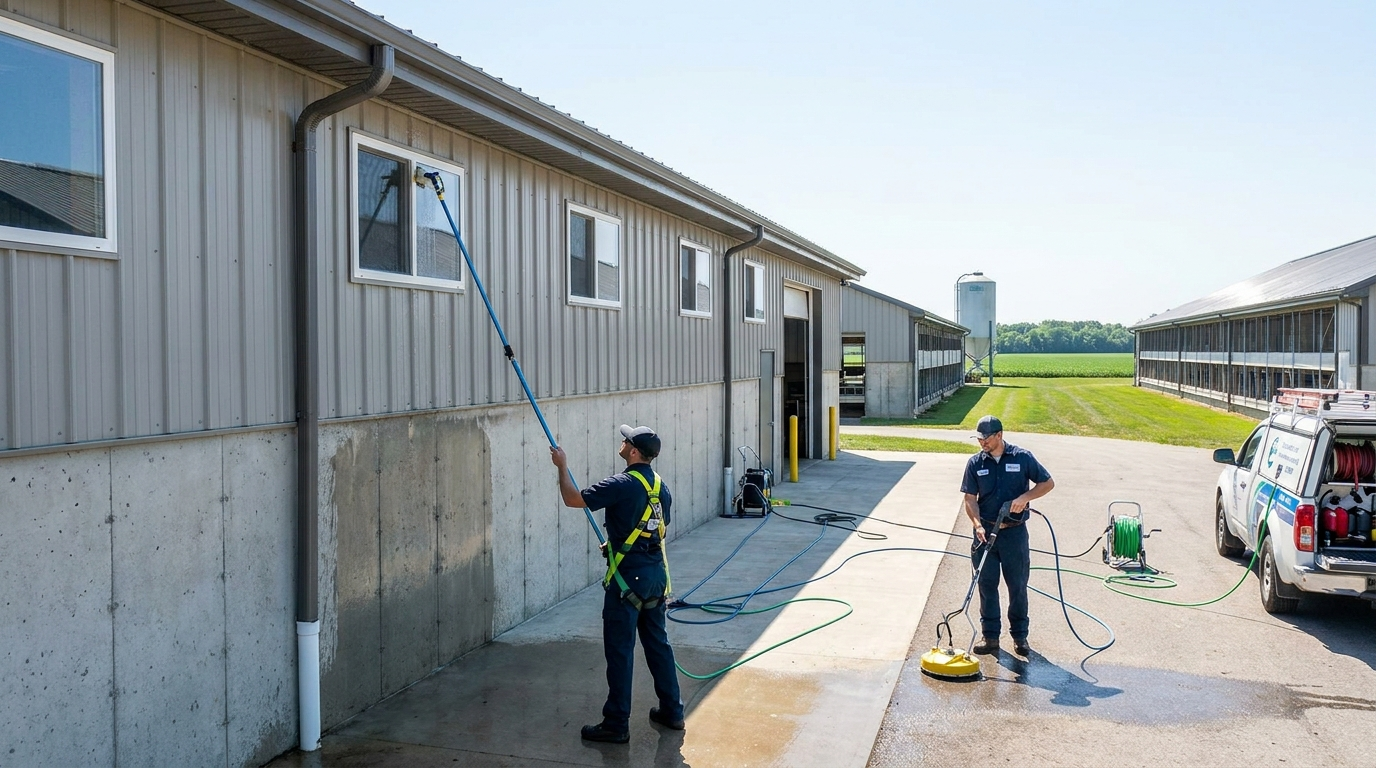
- Concrete (walkways, dumpster pads, loading docks, parking aprons): pressure washing at **2,500–3,500 PSI** with a rotating or fan nozzle. Concrete is dense enough to take it, and embedded grease needs mechanical force to shift.
- Brick facades: pressure washing works, but at a lower range — around **1,200–1,800 PSI**. The brick face is usually fine; the mortar joints are the vulnerability, particularly on older buildings.
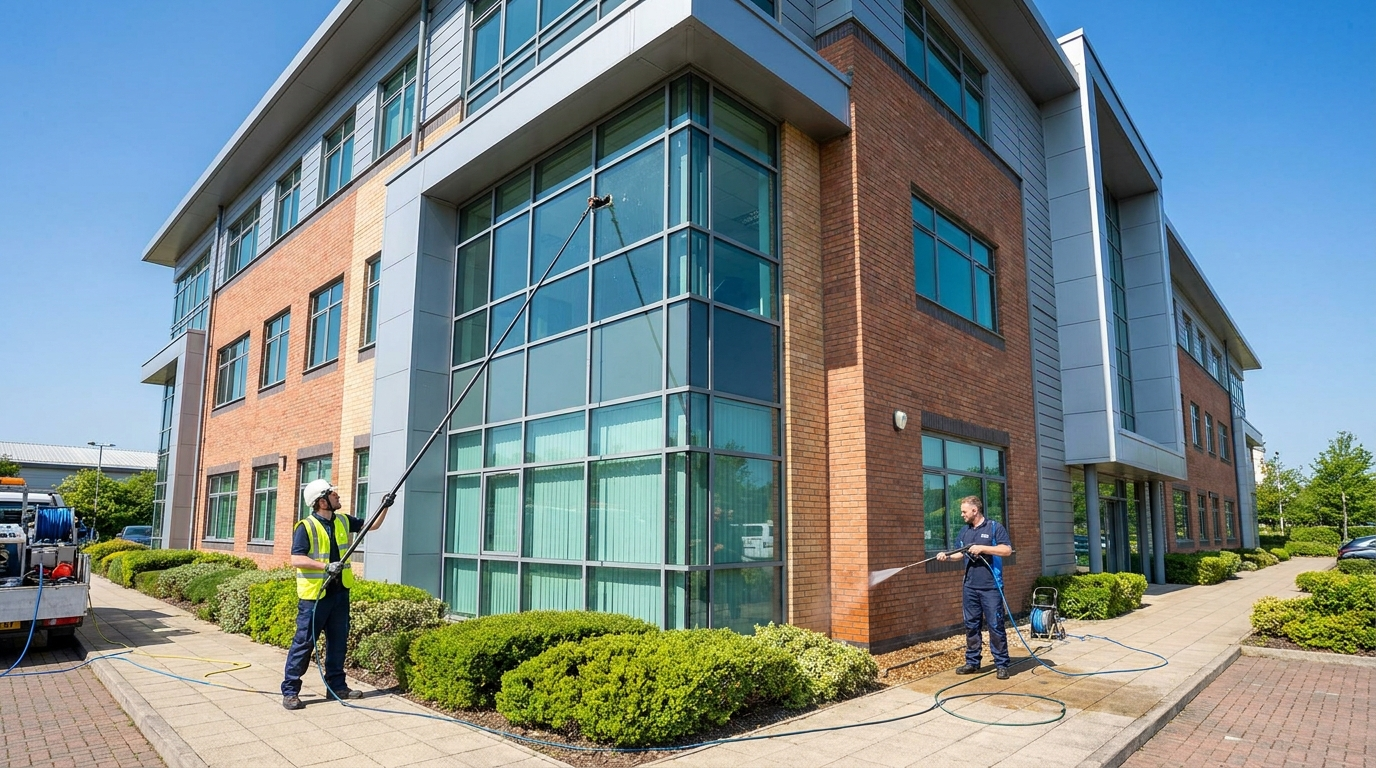
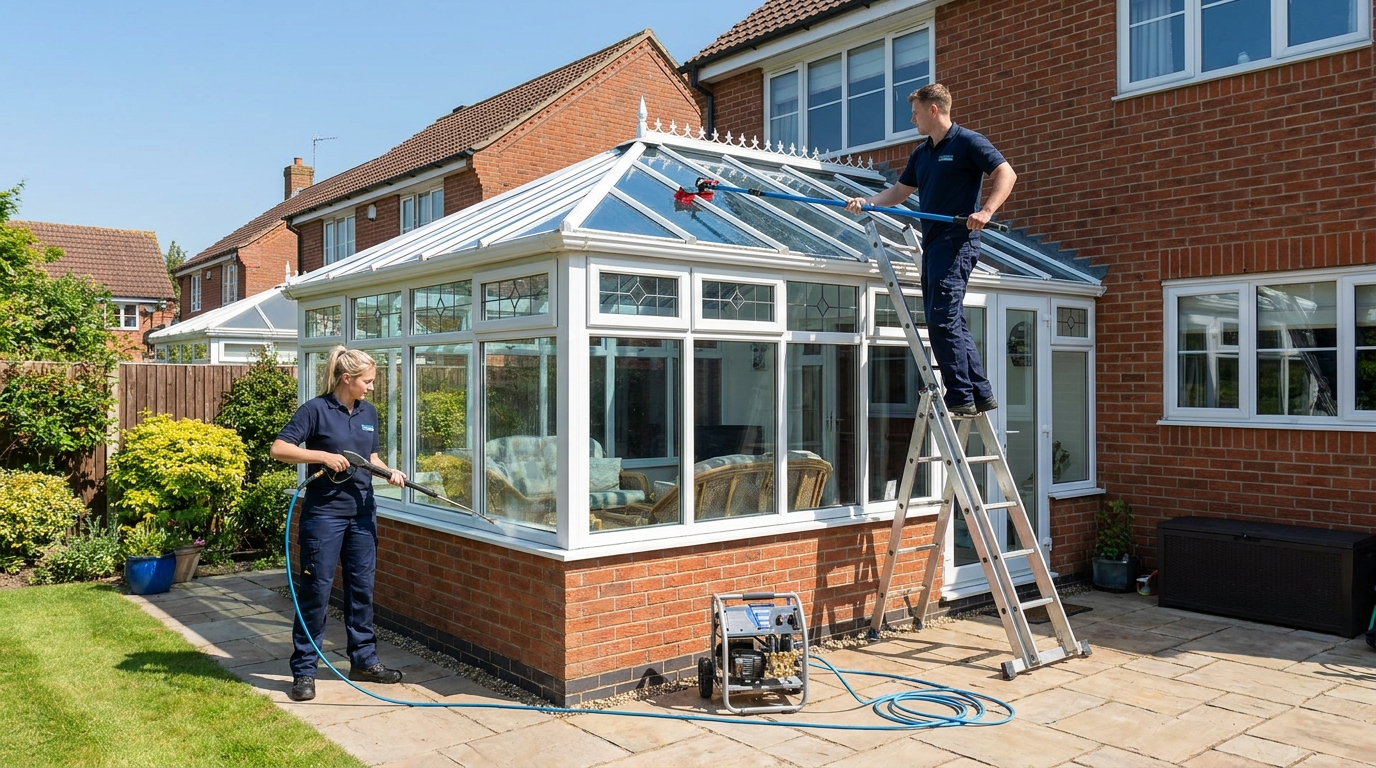
- Stucco and EIFS cladding: soft washing only, at **100–300 PSI** maximum. High pressure on stucco cracks the finish. On EIFS, it forces water behind the insulation layer where it causes hidden structural damage — the kind that doesn't show up until the next inspection.
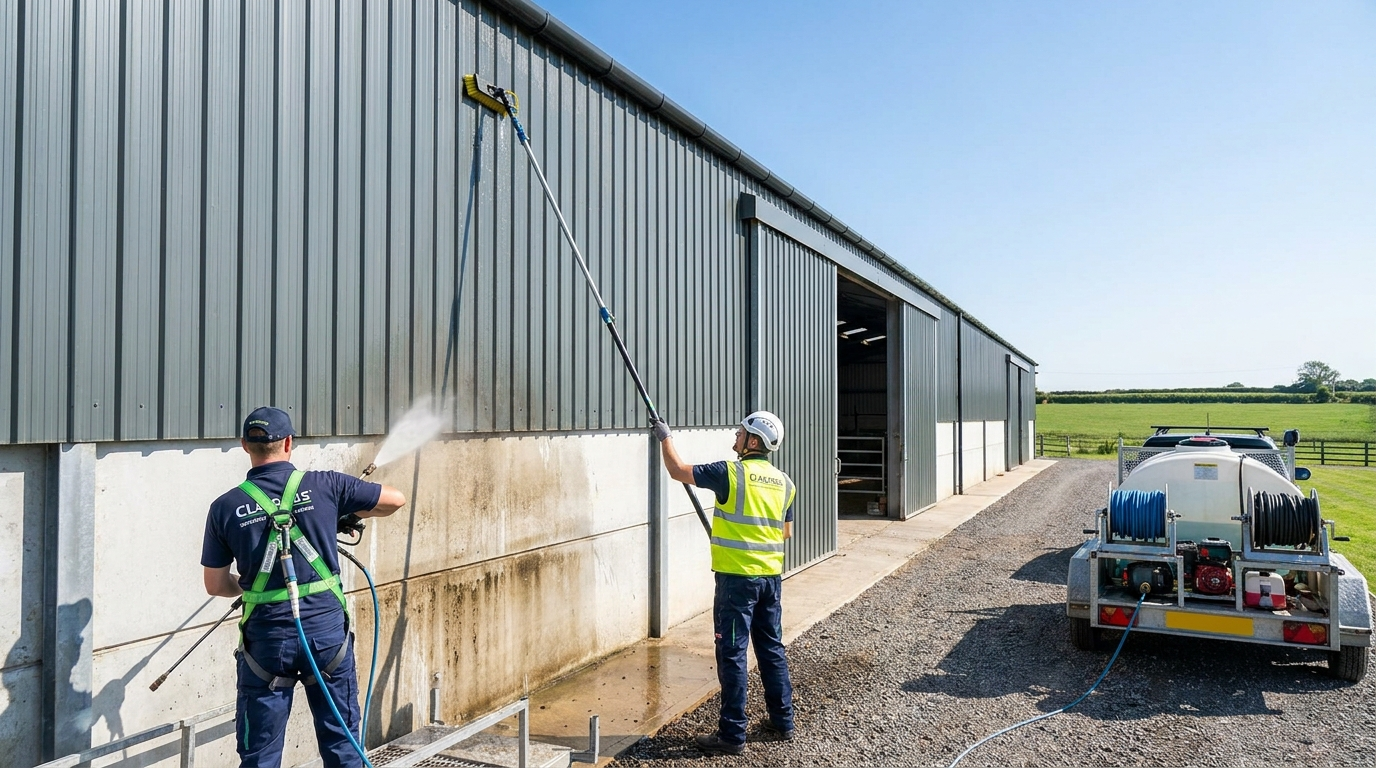
- Painted siding and cladding panels: soft washing at **100–400 PSI**. Pressure strips paint, opens seams, and can force water into the wall cavity.
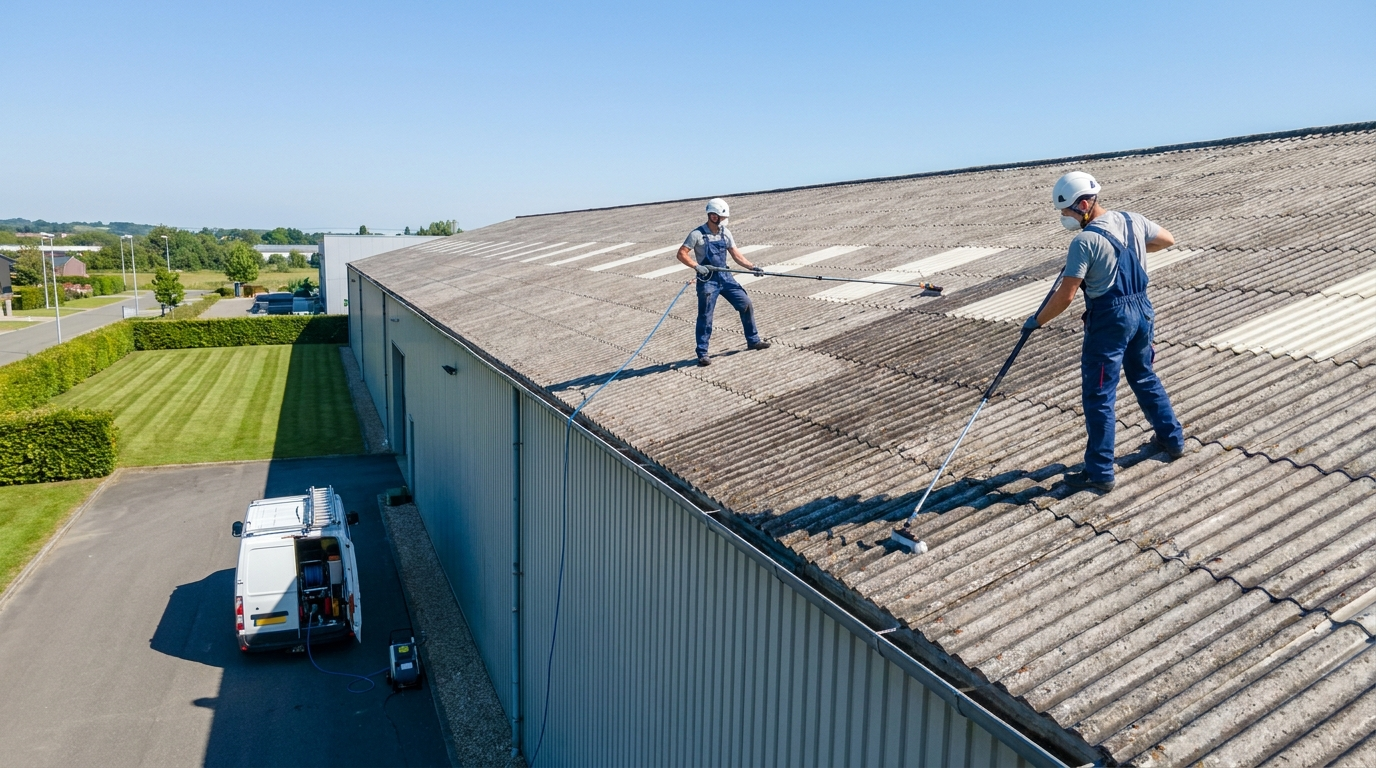
- Roofs: soft washing only, well under 500 PSI. High pressure causes granule loss on shingles, can lift tiles, and voids most manufacturer warranties.
Soft washing compensates for the lower pressure with cleaning solution — typically a surfactant-combined sodium hypochlorite mix that breaks down biological growth chemically rather than blasting it off mechanically. On surfaces like render, siding, and EIFS, this produces a cleaner finish that also lasts longer, because the root of the contamination has been treated rather than scraped off the surface.
The final inspection isn't optional
A job isn't finished when the equipment gets loaded back into the van. A proper post-clean inspection is what separates a competent contractor from one who'll be back in six months because something was missed.
The post-job walkthrough covers three things:
Residue rinse. Cleaning solutions left on glass, metal trim, or sealed surfaces cause streaking or staining if they're not fully rinsed. Every treated surface should be rinsed with clean water after the solution has had its dwell time.
Spot-check for missed areas. A single pass rarely catches everything on a large commercial facade. Shadowed corners, areas behind downpipes, recessed panels, and anywhere runoff pooled all need a second look.
Uniform finish check. Step back far enough to see the full elevation. Patchy results on a rendered facade are usually a sign of inconsistent dwell time or technique, not dirt that wouldn't come off. Documenting the final condition with photographs is worth doing — it gives you a maintenance record and a straightforward way to confirm what was done and when.
The inspection is also where landscaping protection gets reviewed. Pre-wetted planting beds should be rinsed again after the job, and any chemical contact with lawn areas noted for monitoring.
What to ask any vendor before you book
Not all commercial exterior cleaners work the same way. A few direct questions will tell you quickly whether a contractor understands surface-specific work or plans to pressure wash everything at the same setting and hope for the best.
"What method will you use on our stucco, render, or EIFS — and at what PSI?" A contractor who can't answer this confidently, or who suggests pressure washing stucco, is a risk.
"Are you insured for damage to building facades and tenant property?"
Public liability cover is the minimum; confirm it covers damage caused during the clean, not just third-party injury.
"How do you protect landscaping and planting beds during chemical application?" Pre-wetting, covering, and post-rinse are all standard practice. Vague answers here are a warning sign.
"How do you handle tenant-facing areas during the job?"
Entrances, loading zones, and emergency exits all need to remain accessible, or clearly communicated as temporarily restricted. Coordinating access and timing around occupant safety is part of pre-job planning, not an afterthought.
What to do next
Walk your property perimeter and photograph it before requesting quotes. Visible staining, biological growth, and damaged joints give you a baseline and make the scoping conversation much more specific.
List every exterior surface type on your building — concrete, brick, render, stucco, EIFS, painted cladding, roof sections. That list should form the basis of any scope of work a contractor provides.
Ask for a written method statement before confirming any booking. It should specify the cleaning method, PSI range, chemicals used, and how landscaping and tenants will be managed. If a contractor won't provide one, find one who will.
Commercial exterior cleaning is a sequenced, surface-specific process — not a single technique applied uniformly across a whole building. The difference between a contractor who understands that and one who doesn't is often the difference between a clean building and a damaged facade.
If your current vendor pressure washes everything, it's worth finding out exactly what they're running on your stucco or render — and whether anyone has checked it since the last clean.