How to Plan Commercial Exterior Cleaning Year-Round: A Practical Guide for Property Managers
Most property managers schedule exterior cleaning reactively — a gutter clear in November when someone notices overflow, a car park pressure wash before the landlord's visit, a window clean when a tenant raises it. It works, until it doesn't. By the time black algae has set into render or a blocked downpipe has forced water behind brickwork, you're not booking a clean — you're booking a repair.
A planned, year-round approach costs less, causes less disruption, and protects the fabric of the building. Here's how to structure it.
Exterior cleaning isn't one job — it's four separate maintenance tasks
The most common mistake is treating "exterior cleaning" as a single line item. Windows, gutters, roofs, and hard surfaces each operate on different cycles, respond to different seasonal pressures, and require different equipment and methods. Bundling them together — or ignoring the distinction — means some surfaces get done too often and others not nearly enough.
Windows
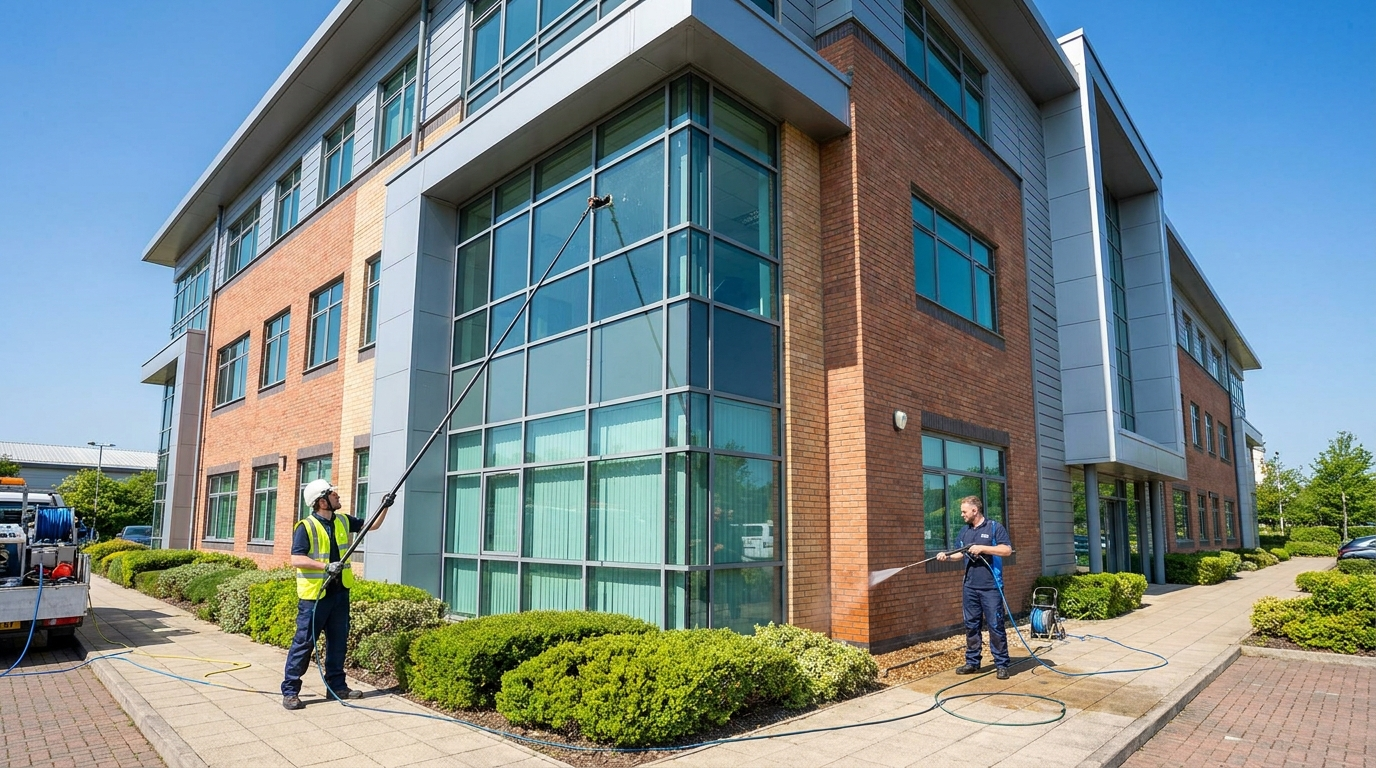
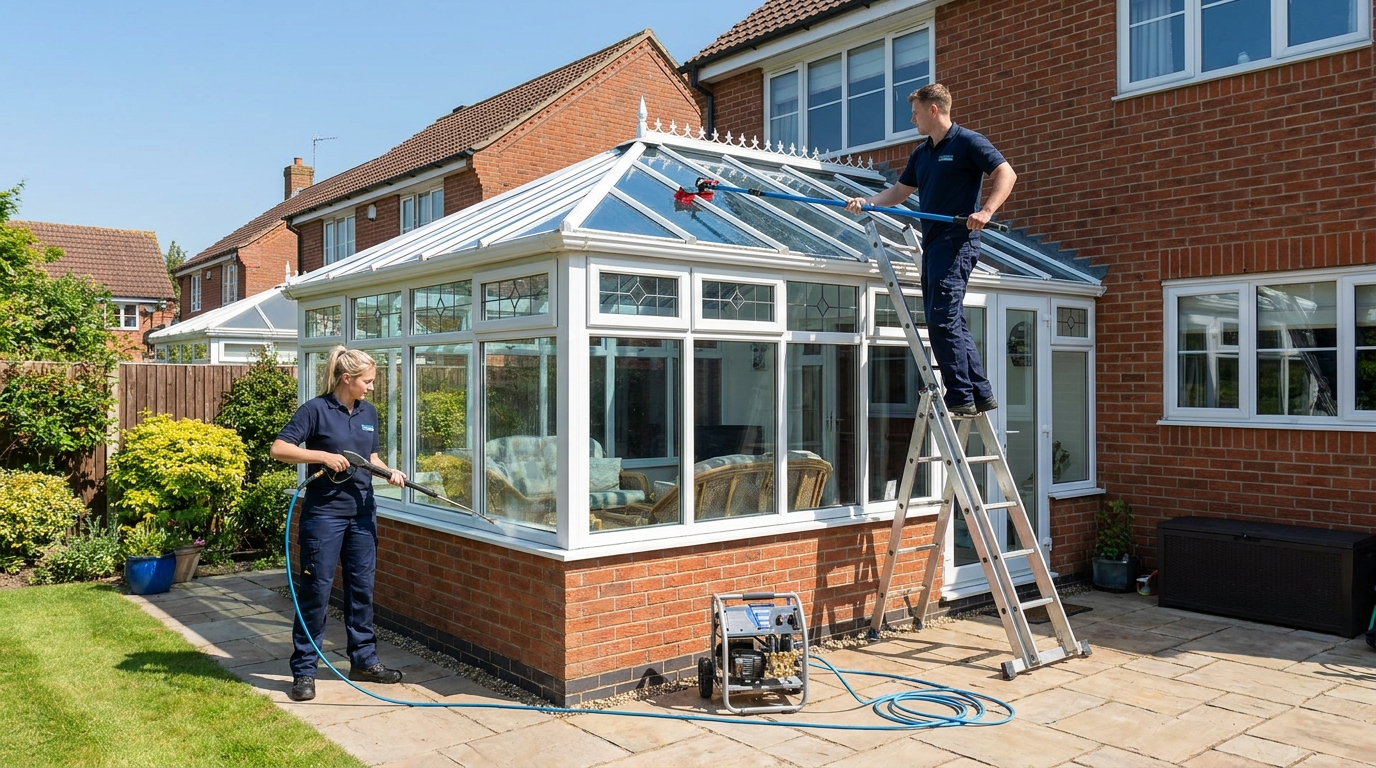
on a client-facing commercial building typically need cleaning monthly or quarterly. In cities like Manchester or London, where vehicle emissions and airborne particulates settle on glass constantly, monthly is standard. Further from urban centres, quarterly often suffices — though the right frequency is determined by what the building's presentation requires, not by what's cheapest.
Gutters need clearing at minimum twice a year. If there are mature trees near the building, three times is more realistic. Leaves don't block gutters in one dramatic autumn event — they accumulate steadily from August onwards, then compact over winter. A single annual clear in January is already too late for the water damage that crept in during October.
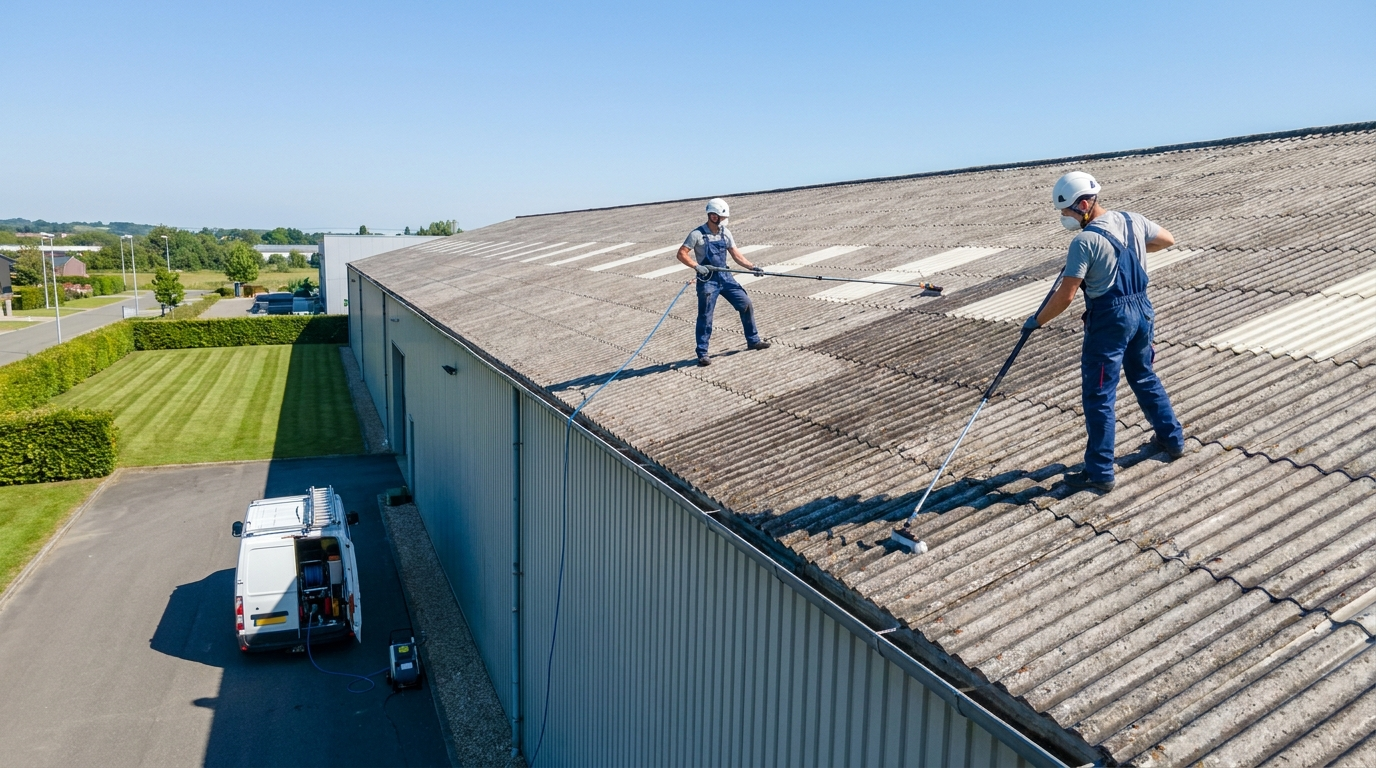
Roof cleaning — removing moss, algae, and lichen — typically runs on a one-to-two-year cycle. This isn't cosmetic. Moss retains moisture against the roof membrane or tiles, accelerating deterioration. Contractors should use licensed biocides applied correctly — not just a pressure washer.
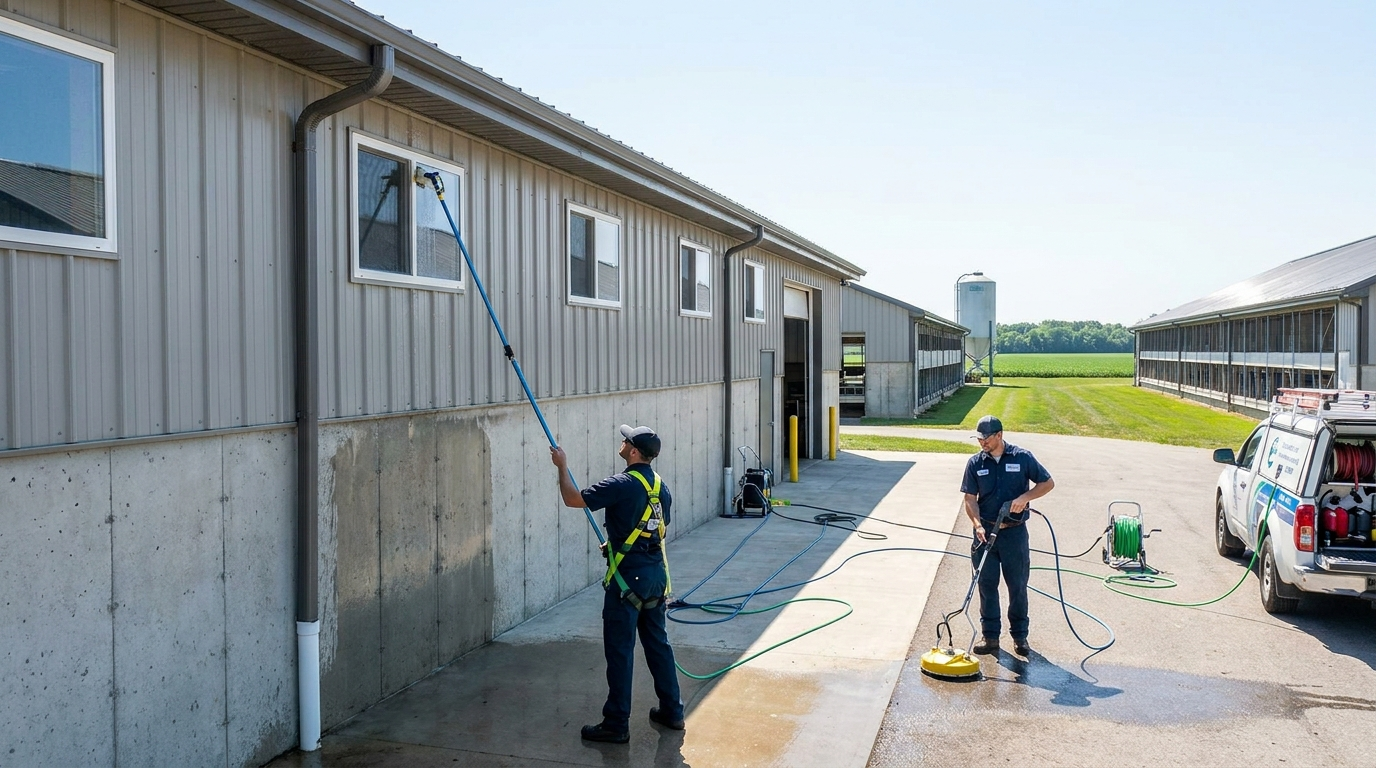
Hard surface washing
—
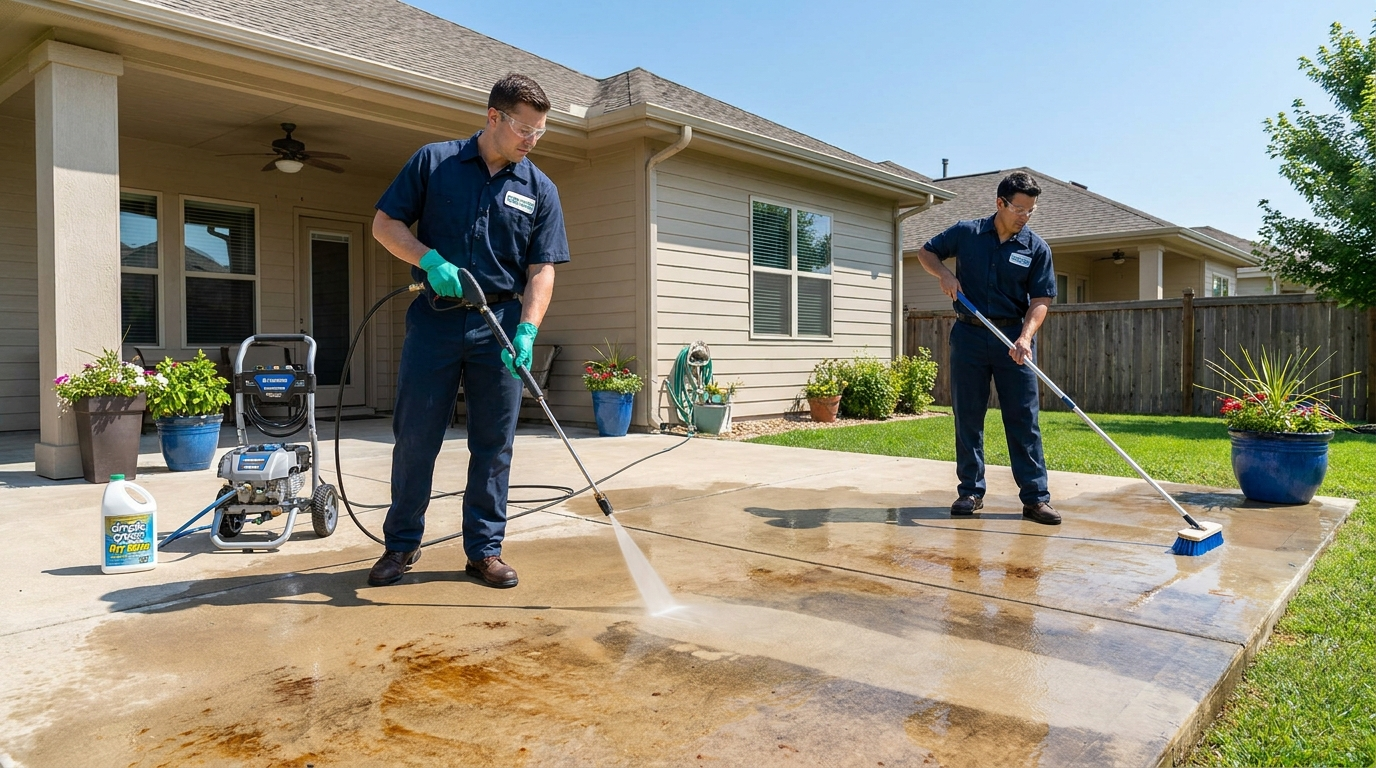
car parks, service yards, entrance canopies, paving — generally needs a thorough pressure wash once or twice a year, with more frequent attention on high-footfall areas where algae creates a genuine slip hazard on Yorkshire stone or concrete flags, particularly between October and March.
Seasonal timing: when each service actually matters
Knowing what needs doing is only half the plan. Timing is where most property managers get it wrong.
Spring (March–May) is the most productive window for catching damage before it escalates. After winter, gutter systems will have accumulated debris from storms; render and cladding will show the full effect of months of wet weather. This is the right time for a thorough gutter inspection and clear, a pressure wash of entrance areas and walkways, and — if your roof hasn't been treated in the past 18 months — a soft-wash biocide treatment before moss growth accelerates through summer.
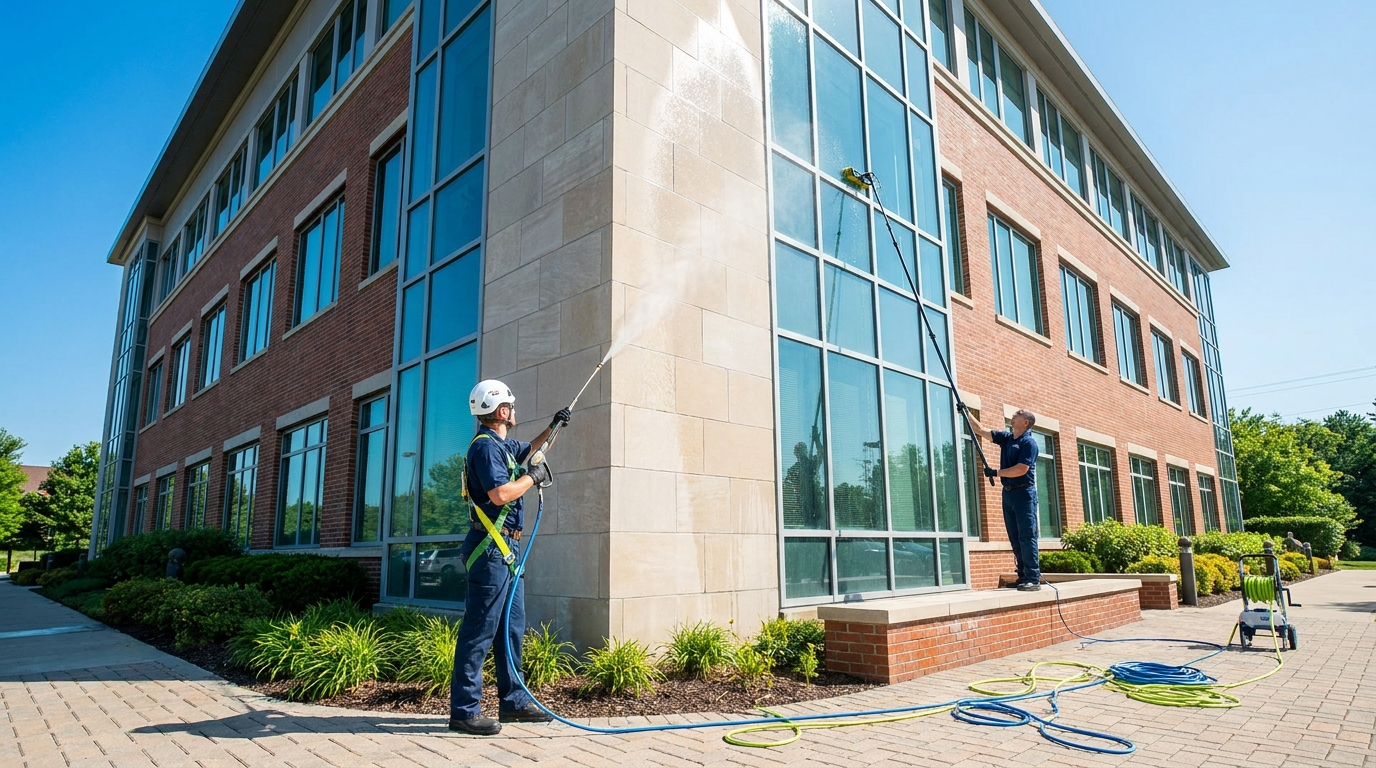
Summer (June–August) is best used for window cleaning on a regular cycle, and for any façade or cladding deep cleans that benefit from dry, mild conditions. Pressure washing is more effective in warmer weather — chemical dwell times are longer and surfaces dry faster. It's also the safer season for scheduling roof inspections that require access.
Autumn (September–November) is defined by one priority: gutters. Clear them before the heavy leaf fall, then again in November or December once most leaves are down. Missing this window is where the expensive problems start. A secondary job for autumn is clearing entrance surfaces of leaf debris and early algae growth before the first frosts make them a liability.
Winter (December–February) is the season most people associate with doing nothing. In practice, it's the season for planning. Avoid scheduling pressure washing in freezing conditions — water forced into joints or cracks at pressure, then frozen, accelerates exactly the kind of spalling and mortar damage you're trying to prevent. Window cleaning can continue year-round using appropriate methods, and winter is a sensible time to book spring cleans before the demand surge hits.
Before you hire anyone: what to actually check
Insurance is the starting point, not the ceiling. Any commercial exterior cleaning contractor should carry public liability insurance covering third-party injury or property damage. For a commercial site, look for a minimum indemnity limit of £2 million, and confirm the policy description specifically includes the services being performed — pressure washing, roof cleaning, and gutter cleaning are sometimes excluded on more basic policies. If they employ staff, employers' liability insurance is a legal requirement under the Employers' Liability (Compulsory Insurance) Regulations. Ask for the certificate and check the expiry date.
Health and safety competence is harder to fake when you ask for specifics. SSIP-accredited contractors — those holding SafeContractor, CHAS, or SMAS certification — have documented risk assessments, method statements, and health and safety management systems that have been independently verified. The Exterior Cleaning Association accepts SSIP accreditation as evidence of robust safety management, and their [membership criteria](https://exteriorcleaningassociation.org/become-an-approved-member/) give you a reasonable benchmark for what a professional operation should look like.
Working at height competence matters for anything above ground level. Gutters, high-level cladding, and roof work all require training beyond common sense. Ask whether they use gutter vacuum systems operated from the ground — which eliminates most of the height risk for standard single-storey and low-rise guttering — and what fall-prevention measures apply when roof access is unavoidable.
Chemical use is often overlooked. Biocide treatments for roofs and renders require COSHH-assessed products. Contractors should be able to provide Safety Data Sheets for anything they intend to apply, and they should understand how to manage runoff so it doesn't contaminate surface water drains. Site-specific assessment is essential before any cleaning programme begins. If a contractor quotes you without seeing the building, treat that as a warning sign.
What to ask before you sign anything
A few direct questions will tell you most of what you need to know:
-
"Can you provide site-specific risk assessments and method statements before the work starts?"
A professional contractor will consider this routine. One who finds the question unusual probably hasn't worked on many managed commercial sites.
- "What method will you use on the roof — and why that method for this surface type?" There's no single right answer, but there is a wrong one: "we'll just pressure wash it." High-pressure cleaning on most UK roof materials causes more damage than it prevents.
- "How do you manage runoff from pressure washing near drainage systems?" This matters for regulatory compliance and for neighbouring businesses or car park users.
- "What happens if a surface is damaged during the clean?" The answer should reference their public liability insurance, not just reassurance.
-
"Have you worked on buildings of this type before?" References from similar commercial properties — not just domestic work — are worth asking for.
What to do next
- Walk your building's perimeter and note what hasn't been cleaned in the past 12 months. Pay particular attention to the base of downpipes, any north-facing render or cladding where algae establishes first, and the condition of entrance paving.
- Build a simple four-column maintenance schedule — one column per service type (windows, gutters, hard surfaces, roof) — and assign a realistic frequency based on your building's location and exposure. Urban and high-footfall sites almost always need more frequent attention than the minimum.
- When requesting quotes, ask for the insurance certificate and a sample method statement before any contractor visits the site. If they can't supply these upfront, the conversation ends there.
- Schedule your gutter clear for October, not January. By January, the damage is already done.
Commercial exterior cleaning is most expensive when it's reactive. A year-round schedule — windows on a monthly or quarterly cycle, gutters cleared in late autumn and again in spring, hard surfaces pressure-washed once or twice a year, and roofs treated every one to two years — keeps a building in good condition without crisis costs. The question worth sitting with: when was the last time someone actually inspected your gutters, rather than just assumed they were fine?