
How to build a commercial farm exterior cleaning plan that prevents costly damage
Farm buildings take a serious beating. Between heavy equipment traffic, organic dust, wind-driven debris, freeze-thaw cycles, and the daily grind of agricultural operations, the exterior fabric of a working farm deteriorates faster than almost any other commercial property type. Most farm operators know this. What many don't have is a structured plan for dealing with it — so small problems become expensive ones.
A blocked downspout costs almost nothing to clear. Left through winter, it backs up, freezes, pulls the gutter bracket off, and lets water sit against the fascia until you have rot, rust, or a leaking eave. Emergency repairs typically cost up to five times more than the routine maintenance that would have prevented them. On a farm with multiple structures, that multiplier adds up fast.
Start with a full inventory of every exterior surface
Before you build a schedule, you need to know what you're scheduling. Most farm operators deal with things when they break rather than working from a deliberate list of what needs attention and when.
Walk every structure on your property and record every exterior area that requires regular attention: gutters and downspouts, roof surfaces and flashings, siding and wall cladding, windows and door frames, concrete walkways and aprons, and vehicle hardstanding areas. Note the condition, the material — metal sheeting, fibre cement, timber cladding, concrete block — and any obvious risks: cracked concrete near a pedestrian entrance, a sagging section of guttering, algae building up on the south-facing wall of the grain store.
This inventory becomes the backbone of your maintenance calendar. A 12-building farm and a 3-building smallholding need very different schedules, and until you've listed everything explicitly, you can't assign tasks, frequencies, or responsibilities with any accuracy.
Don't overlook the less-visited buildings. The machine shed at the back of the yard and the old workshop that rarely gets used are often where water ingress, corroding cladding, and debris-choked gutters quietly cause the most long-term damage — precisely because nobody walks past them often enough to notice.
Match tasks to the right frequency — not just when it looks bad
The most common mistake in farm exterior maintenance is reactive scheduling: things get cleaned or inspected only when a problem becomes visible, which is usually after the damage is already done.
A practical maintenance cadence works in four tiers.
Monthly checks are visual, not cleaning operations. Walk the downspout outlets at ground level after rain to confirm water is discharging freely. Look for obvious damage after heavy winds. Scan hard-surfaced areas near building entrances for new cracks or trip hazards. These checks take 15 minutes and catch the kind of early problems that would otherwise wait until an annual inspection — by which point they cost more to fix.
Seasonal cleans — spring and autumn — are when the real exterior work happens. Most gutter manufacturers advise semi-annual cleaning as a baseline, with greater frequency for buildings surrounded by trees or near dusty agricultural operations. Spring cleaning clears debris that has accumulated over winter and prepares your drainage system for wet weather. Autumn cleaning removes fallen leaves and organic material before it compacts and freezes in place. At the same visits, inspect siding and cladding for rust, coating failure, cracked sealants around door and window frames, and any impact damage from machinery.
Annual tasks
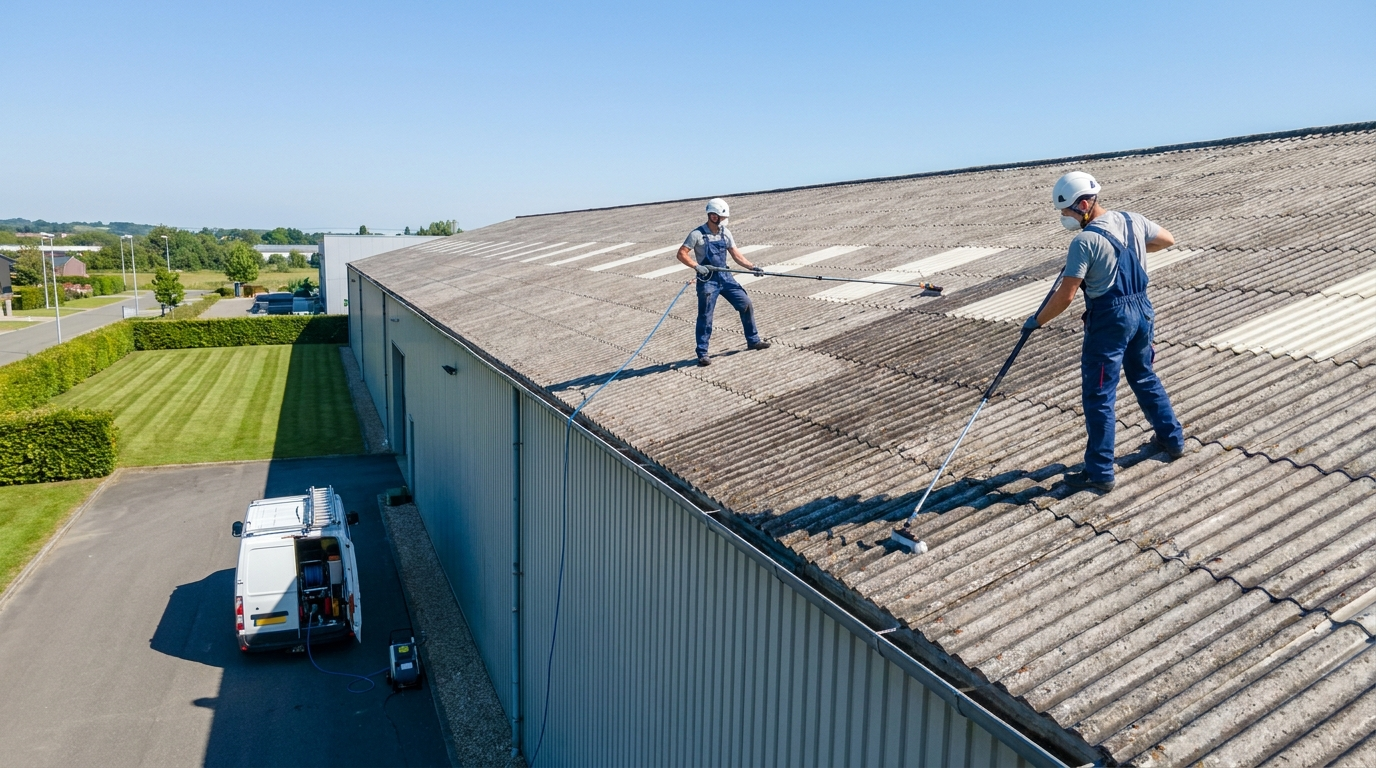
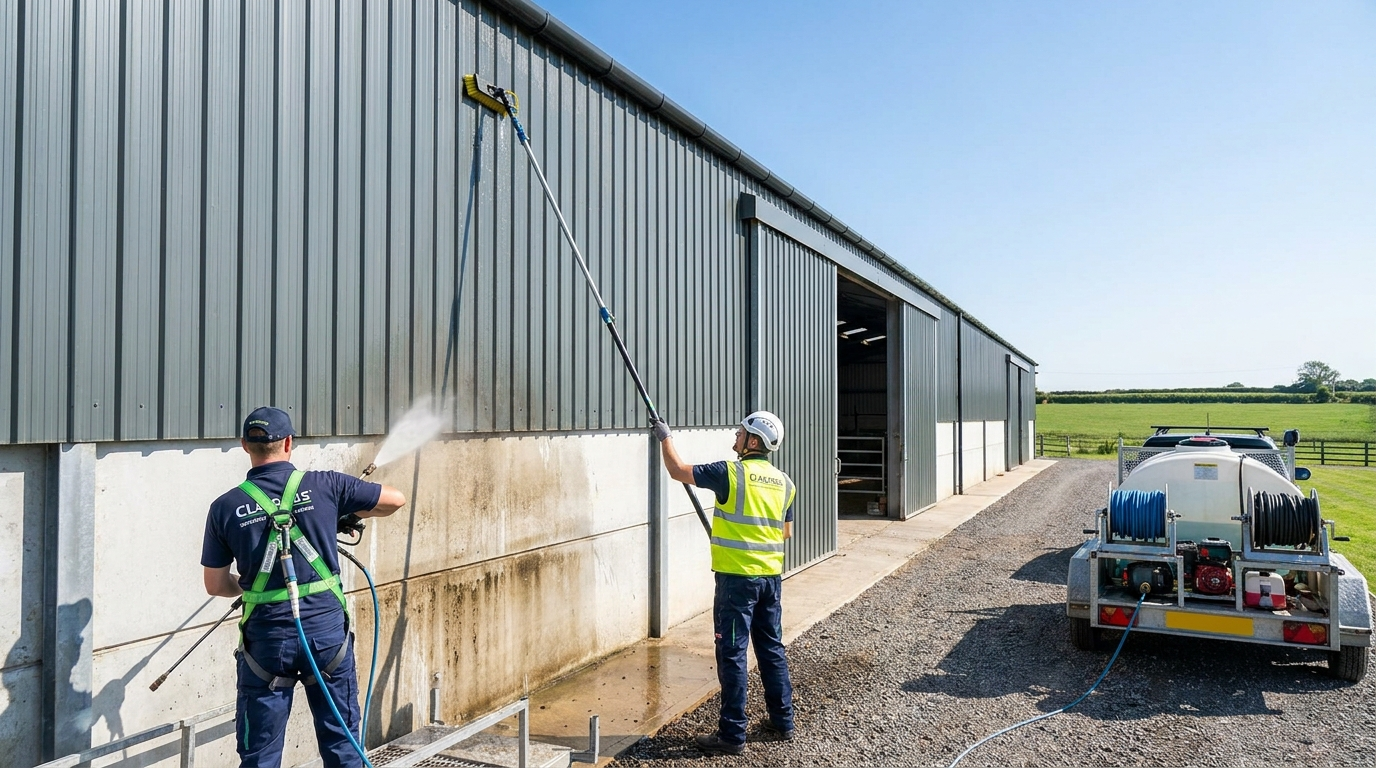
include a full exterior wash of siding and hard surfaces, a thorough roof inspection covering fasteners, penetrations, ridge caps, and valley sections that collect debris, and a professional gutter clean if you haven't been handling them in-house. On metal-clad agricultural buildings, the annual wash also removes corrosive residues — manure splatter, fertiliser dust, silage liquor — that accelerate surface degradation if left in contact with the panels.
Reactive jobs cover what you can't schedule in advance: post-storm roof checks, clearing a blocked drain, or dealing with a walkway after an unusually heavy leaf fall. These supplement your planned schedule; they don't replace it.
Know which surfaces carry the highest risk
Not every exterior surface is equally important to maintain on schedule. On a commercial farm, some neglect is an inconvenience; some is a safety and liability issue.
Farm building safety data from the University of Minnesota Extension shows that nearly 30% of all farm injuries requiring time away from work are caused by falls, with a significant proportion occurring near building entrances, walkways, and hard-surfaced yard areas. Cracked or spalled concrete that creates an uneven threshold, algae or grain dust on a wet walkway, standing water pooling near a frequently used door — these are not cosmetic issues. They are injury risks, and increasingly, liability.
Concrete walkways and aprons around buildings should be treated as high priority. Keep them clear of organic buildup, repair cracks before freeze-thaw cycles expand them, and confirm that drainage channels are directing water away from foot-traffic areas.
Gutters and downspouts
sit just below walkways in terms of risk priority. A blocked gutter doesn't just overflow — it can channel water into wall cavities, undermine slab edges, or saturate foundations. On older metal-framed agricultural buildings, persistent water ingress at the base of a wall can go unnoticed for years before the structural implications become visible.
Roof surfaces
on farm buildings are typically inspected less often than they should be. A loose roof sheet can become a projectile in a storm. Lifted ridge caps let water in, which rots purlins and corrodes fixings from the inside out. A formal roof inspection once a year, with a quick visual from ground level after any significant weather event, is the minimum sensible standard.
Write it down, assign it, and actually use it
A maintenance plan that exists only in the property manager's head is not a plan. Write it down, assign each task to a named person or vendor, set a frequency, and put it somewhere the whole team can see it.
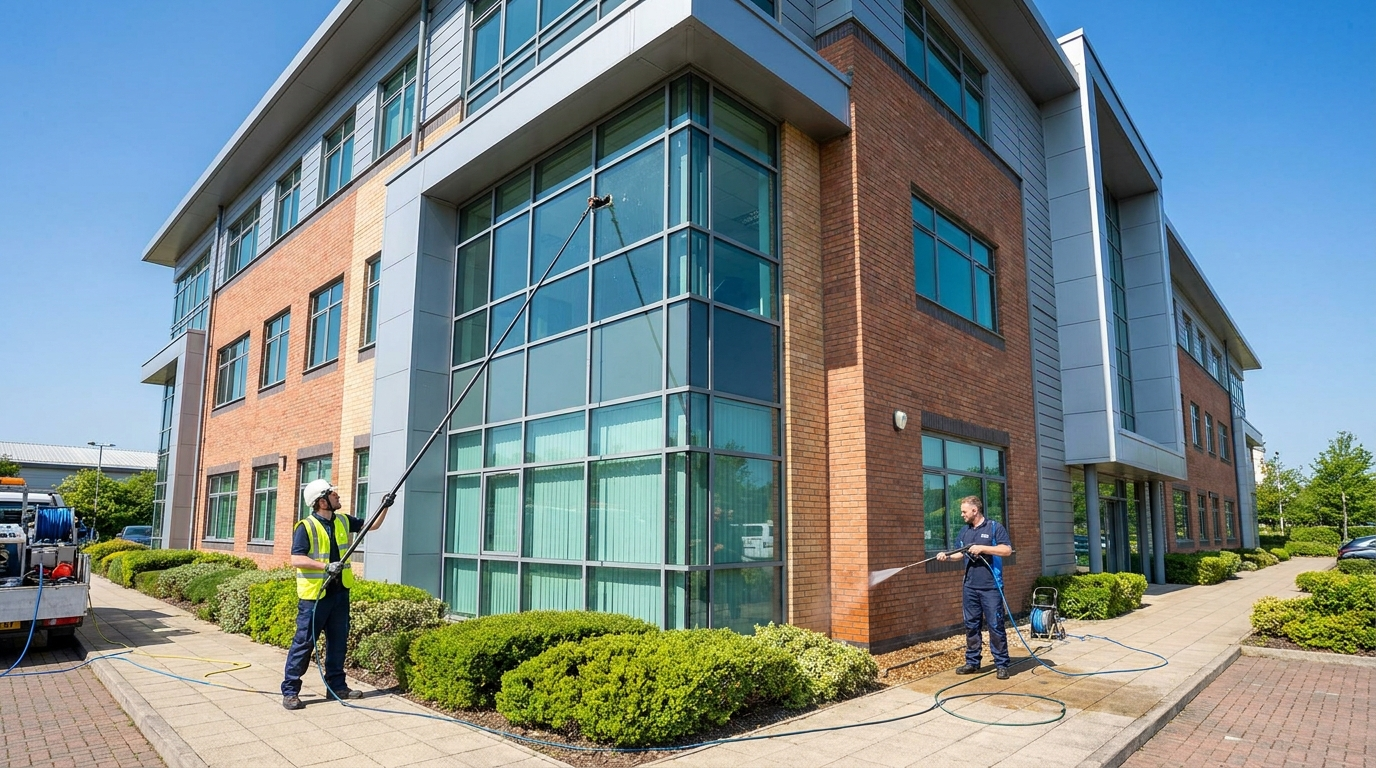
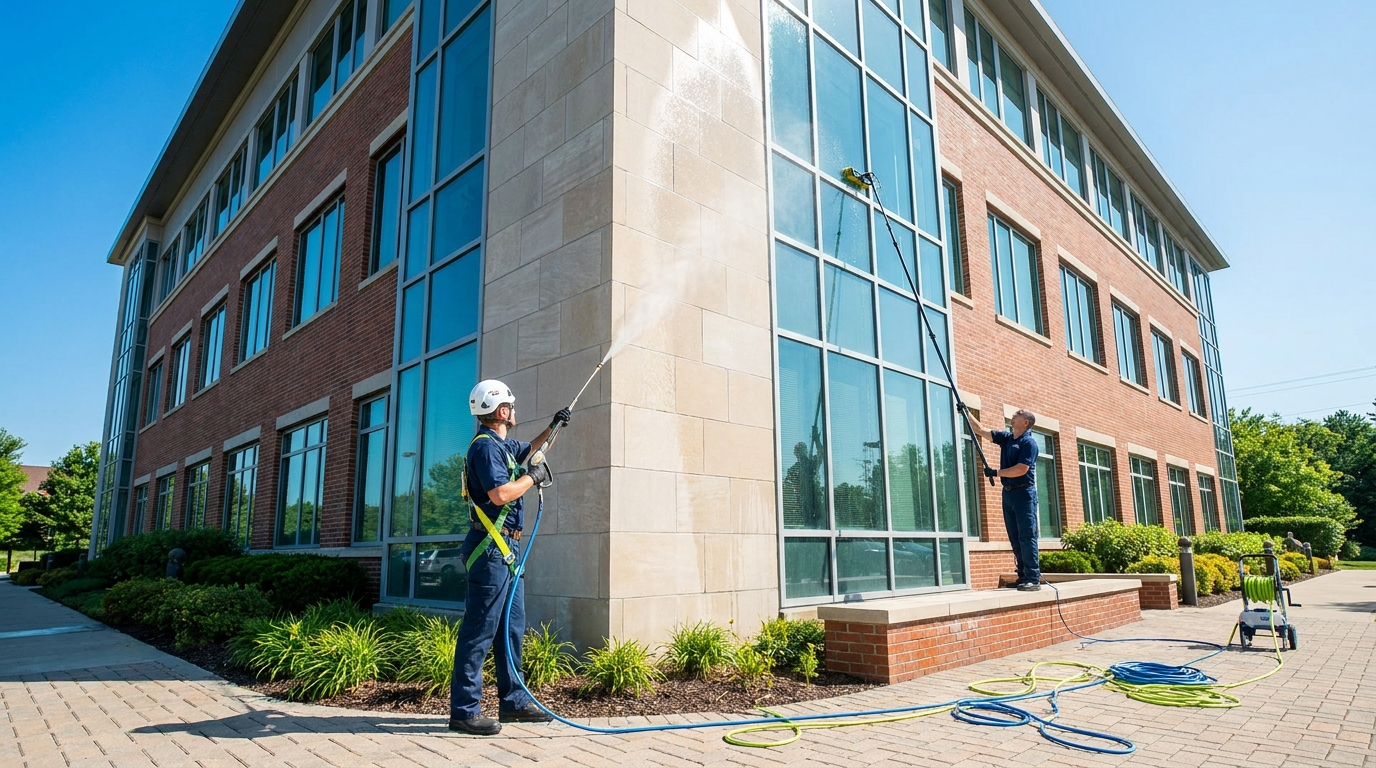
A simple spreadsheet works: task, location or building, frequency, responsible person, date last completed, notes. Monthly walkarounds should sit with whoever manages the site day to day. Seasonal and annual cleans are often better handled by an external contractor who has the right equipment for gutter access, pressure washing, and roof-level work on multi-span buildings.
Build in a review cycle. The first version of your plan will miss things. After the first full year of following it, ask: what did we catch that would have been missed? What did we miss that shouldn't have been? What took more time or resource than expected? Adjust accordingly.
One practical approach: tie your seasonal exterior maintenance visits to events already in your farming calendar. Pre-harvest is a natural trigger for a late-summer walkabout. Post-harvest and pre-winter is the right time for the gutter clean and roof check. Using existing rhythms makes it easier to stick to the schedule.
What to do next
- This week: Walk every structure on your property and write down every exterior surface that needs attention — gutters, walls, roofs, windows, concrete, hardstanding. Don't filter yet; just list everything.
- This month: Categorise those items by frequency — monthly check, seasonal clean, annual inspection — and assign a responsible person to each.
- Before the next season change: Book the seasonal gutter clean and siding inspection if you're not handling it in-house, and do a ground-level concrete and walkway check for any cracks or trip hazards that need attention before the weather turns.
- Annually:
Review the plan each year so the schedule stays current as buildings age or your operations change.
The bottom line
A
commercial farm exterior maintenance plan doesn't need to be complicated — it needs to be specific, written down, and followed consistently. The biggest cost driver in commercial building maintenance isn't the cleaning or inspections themselves; it's the gap between noticing a problem and getting around to fixing it. A structured schedule closes that gap. Before you put the plan away, it's worth asking: which building on your farm has had the least attention over the past 12 months, and what could be quietly developing there right now?